Wednesday, February 22, 2012

(BN) Romney Focuses on Economy as Santorum Touts Christian Values in Michigan


All i see are a bunch of kids squabbling over who should stay at the white house, with no new ideas and too much talk. 


Bloomberg News, sent from my iPad.

Romney Talks Economy as Santorum Touts Christian Values

Feb. 21 (Bloomberg) -- Republican presidential candidate Mitt Romney focused on the economy and government spending in Ohio yesterday, while rival Rick Santorum was in Michigan exhorting voters to back him as a way of promoting their own values with primaries approaching in both states.

In a speech at Meridian Bioscience Inc. in Cincinnati before a private fundraiser, Romney touted his ability to curb spending and lead the economy down a different path than President Barack Obama. He criticized Santorum, a former Pennsylvania senator, for voting to raise the debt ceiling five times without offsetting spending cuts.

"When Republicans go to Washington and spend like Democrats, you're going to have a lot of spending, and that's what we've seen over the last several years," Romney, a former Massachusetts governor, said in the speech. "It's time, in my view, for us to do something that we talk about but rarely have done, and that is cut the amount of federal spending."

While Ohio is what Santorum has called "the key prize" on March 6, Super Tuesday, Michigan and Arizona vote a week earlier, on Feb. 28. Santorum, who has won primary-season contests in four states, is seeking a Michigan victory over Romney, who is a native of the state, by saying he would provide the sharper contrast to Obama in the general election.

Out-of-Wedlock Births

After a morning stop in Ohio, Santorum spent much of yesterday in the western part of Michigan emphasizing such social issues as out-of-wedlock births.

"We really wanted to come out here in Western Michigan and plant the flag here," he told a crowd of more than 500 students and others in a hall at Hope College, a Christian school in Holland. "This is the conservative part of Michigan, and the conservative epicenter for our county."

Santorum's campaign hastily arranged three stops in the area as part of a strategy to turn out voters there for who make a priority of their faith and opposition to abortion rights and gay marriage.

"The values of western Michigan are exactly the values that we are trying to restore," Santorum said in a speech that decried the proliferation of out-of-wedlock births and absentee fathers in the U.S., advocated limited government and strict adherence to the Constitution, and assailed Obama's agenda, particularly the health-care overhaul enacted in 2010.

'Clear Contrast'

Later, at the Kent County Republican Party's Lincoln Day dinner in Grand Rapids, Santorum argued he is the candidate that gives the party the best chance against Obama because of his consistent opposition to the health-care measure and to legislation designed to curb carbon emissions.

"I present a clear contrast with Barack Obama on all these big-government, top-down versus bottom-up" issues, Santorum said. "You have an opportunity here in conservative western Michigan to talk and to speak loudly about what this country means."

While he never named Romney, Santorum was presenting implicit differences with the former Massachusetts governor, who signed a state law that required that everyone purchase medical insurance, and who wrote in his 2010 book "No Apologies," that he believes "human activity is a contributing factor" in global warming.

Climate Change

Santorum recently has begun telling voters that while he believes climate change is occurring, it isn't clear whether human beings are the cause.

He told Kent County Republicans he "never bought into the, quote, 'climate science' of global warming that we later found out was not climate science, it was political science."

Romney said in Cincinnati that he would be the better alternative to Obama.

"One of the reasons I'm running is to replace Barack Obama with someone who understands how the private sector works," Romney said.

U.S. Senator Rob Portman, Romney's highest-profile Republican supporter in Ohio, said in his introduction of the two-time presidential candidate in Cincinnati that Republicans need to "come together around someone who can defeat President Obama in November and begin the task of repairing our broken economy."

Gay Marriage

Asked after the speech how important such social issues as gay marriage and abortion rights will be in the Michigan and Ohio primaries, Portman said the Republican candidates tend to have the same positions and that the economy will be paramount.

Portman also said it's premature to talk about what will happen if Romney doesn't win in Michigan.

"The process is just beginning in terms of the number of delegates," Portman told reporters. "I've always believed this is going to go into the spring, I think it will. But I think there's no question that he has the message and he has the organization and the staying power to be our nominee."

Santorum also highlighted his opposition to abortion rights and other social issues during campaign stops late last week -- including saying during a speech to anti-government spending Tea Party activists in Columbus Feb. 18 that Obama has a "phony theology" and "not a theology based on the Bible, a different theology."

Appearing on the CBS "Face the Nation" program Feb. 19, Santorum said he wasn't questioning Obama's Christian faith. He said Obama is beholden to "radical environmentalists" and has "a world view that elevates the earth above man."

"This idea that man is here to serve the earth, as opposed to husband its resources and being good stewards of the earth, and I think that is a phony ideal," Santorum said.

Santorum heads today to Arizona, which also holds its primary Feb. 28, for two days of events there and a Feb. 22 debate in Mesa.

To contact the reporters on this story: Mark Niquette in Cincinnati, Ohio at mniquette@bloomberg.net Julie Hirschfeld Davis in Holland, Michigan at Or jdavis159@bloomberg.net

To contact the editor responsible for this story: Jeanne Cummings at jcummings21@bloomberg.net

Find out more about Bloomberg for iPad: http://m.bloomberg.com/ipad/


Sent from my iPad

(BN) Japan Refiners Said to Stall on Iran Crude Oil Agreements Amid U.S. Talks

China, India and Japan need to help ward off the next middle east war. Pressure Iran to give up any nuclear ambitions else with no demand, iran crude should go at $20/bbl levels. We live in a connected world, iran needs to know that they owe something to the rest of the world who buy their oil with hard earned money from the sweat of the brow, what Allah has given them for free. 


Bloomberg News, sent from my iPad.

Japan Refiners Said to Stall on Iran Deals; China Accepts Terms

Feb. 21 (Bloomberg) -- Refiners in Japan are holding off from signing oil-supply contracts from Iran, four people with knowledge of the talks said, while China International United Petroleum & Chemical Co. agreed to most terms of a 2012 deal with the Islamic republic, according to three other people.

At least three Japanese refiners that buy crude from the Persian Gulf nation haven't renewed annual contracts with National Iranian Oil Co., pending direction from the government, according to the people, who declined to be identified because the information is confidential. The contracts are for more than 100,000 barrels a day of crude, about a third of Japan's imports from Iran, according to data supplied by the people.

The talks underline the contrasting way in which Asian countries, among the largest importers of crude, are managing the need to secure supplies against a backdrop of tightened U.S. and European Union sanctions on OPEC's second-biggest producer. The measures have strengthened the bargaining position of China, which buys about a fifth of Iran's crude exports, the International Energy Agency said Feb. 10. Refiners in India are studying an Iranian offer to accept extra shipments on revised terms, three people familiar with the matter said today.

"Make no mistake, the party that's getting hammered left, right and center at the moment is Iran," said Praveen Kumar, an analyst at Facts Global Energy in Singapore. "They are sitting on about 400,000 barrels a day of excess crude, and it's fair to say the Asian buyers have the upper hand at the moment."

Seeking Exemption

Japan, the world's second-biggest buyer of Iran's crude after China, is seeking an exemption to a U.S. law that would punish banks that do business with Iran. The law, aimed at reducing Iran's oil sales, will sanction any country's financial institutions that do business with Iran's central bank unless it's determined that country has made "significant reductions" in Iranian oil imports.

Japan will propose cutting crude purchases from Iran by at least 11 percent annually from this year, according to a Japanese government official who declined to be named because the talks are continuing. The government has yet to reach an agreement and is still negotiating with the U.S., Foreign Minister Koichiro Gemba said today.

The refiners must complete supply deals by early March in order to buy Iranian crude beyond next month, when the current contracts expire, according to the people. An agreement between the U.S. and Japan is likely to be concluded by the end of February, according to the government official. At least one refiner has already agreed a contract for supplies starting in January, one of the people said.

China Talks

Japan reduced purchases from Iran by 11.7 percent last year to 18 million kiloliters, or about 313,000 barrels a day, according data compiled by the Ministry of Economy, Trade and Industry. That accounted for 8.8 percent of Japan's total crude oil imports in the year.

Details of the contract between National Iranian Oil Co. and China International, or Unipec, are still to be worked out, according to two people, who declined to be identified because the information is confidential. The Chinese company will get a discount for certain crude grades from Iran compared with market prices, said one of the people.

Huang Wensheng, a Beijing-based spokesman at China Petroleum & Chemical Corp., the parent of Unipec, declined to comment on the Iran deal, citing business confidentiality.

India Refiners Undecided

The volume of Unipec's term purchases from Iran will drop by some extent from last year's level of between 265,000 to 280,000 barrels a day because the Chinese state oil company has halved imports in the first quarter, said one of the people, who declined to give exact volumes. The two sides should have completed 2012 supply talks by the end of December, two people said Jan. 10.

China bought an average of 557,413 barrels daily of Iranian crude in 2011, accounting for 11 percent of total purchases.

Indian refiners have yet to decide on whether they will take up Iran's offer of additional shipments, three people said today. The terms may not necessarily involve lower prices, and could include more flexibility in the grades offered and loading dates, and an increase in the number of days of credit before India is required to pay, one of the people said. Iran hasn't offered India a discount for its crude, one of the people said.

The U.S. and the EU suspect Iran's nuclear program is a cover for developing atomic weapons. President Mahmoud Ahmadinejad's government denies the accusation, maintaining it's for civilian purposes. Iran is exercising its "right to peaceful nuclear energy," Ramin Mehmanparast, a Foreign Ministry spokesman, told reporters in Tehran today.

To contact the reporters on this story: Ramsey Al-Rikabi in Singapore at ralrikabi@bloomberg.net Yuji Okada in Tokyo at yokada6@bloomberg.net

To contact the editor responsible for this story: Alexander Kwiatkowski at akwiatkowsk2@bloomberg.net

Find out more about Bloomberg for iPad: http://m.bloomberg.com/ipad/


Sent from my iPad

(BN) Greece Wins Second Bailout as Europe Chooses Aid Over Def


The money is out of the bank, and more time is bought. Lets make haste, hope for the best for greece and portugal, but set the firewalls even higher.


Bloomberg News, sent from my iPad.

Greece Wins Second Bailout as Europe Chooses Aid Over Def

Feb. 21 (Bloomberg) -- Europe is still struggling to avoid the threat of default as investors warned Greece will soon risk violating the terms of its second bailout in three years.

Seven months of negotiations ended in the pre-dawn hours in Brussels with Greece winning 130 billion euros ($172 billion) in aid it needs to avoid a March bankruptcy. Any respite may prove temporary after it signed up to a program of austerity and economic reform aimed at slashing debt to 120.5 percent of gross domestic product by 2020 from about 160 percent last year.

Even with investors and central bankers chipping in to relieve the debt burden, economists from Citigroup Inc. to Commerzbank AG concluded Greece may again fail to deliver amid a fifth year of recession, looming elections and social unrest. The upshot could be the removal of aid and renewed debate over the merits of fresh assistance before year-end as policy makers shift toward doing more to inoculate the rest of Europe.

"The bailout bandage is on, but it won't take much to unravel," said David Miller, partner at Cheviot Asset Management in London. "The euro zone has done its best to ensure that Greece will deliver on promises, but there is considerable scope for backtracking on deficit reduction."

Financial markets signaled doubt the accord will fix Greece's travails permanently or spell an end to the two-year debt crisis. The euro surrendered initial gains against the dollar and European stocks fell from a six-month high.

Bankruptcy Risks

By supporting Greece, Europe's high command chose the financial and political cost of awarding fresh money over the risk of a bankruptcy that could splinter the 13-year-old euro area. At least 386 billion euros has now been committed to save Greece, Ireland and Portugal with investors predicting the government in Lisbon at least will need more support.

To tackle future fiscal emergencies and limit contagion, officials held out the prospect of boosting their firewall to 750 billion euros from a planned limit of 500 billion euros when a permanent aid fund is paired with the temporary facility starting in July. They also cajoled investors into providing more debt relief in an exchange meant to tide Greece past a March bond repayment.

In return for the new cash, Greece signed up to cuts in pensions, the minimum wage, health-care and defense spending, as well as layoffs of state employees and asset sales. It must implement that austerity with unemployment already topping 20 percent, meaning more retrenchment might end up only compounding the debt stress.

Dangers 'Substantial'

"The danger of Greece saving itself into economic depression and having to default and exit the common currency zone remains substantial," said Christian Schulz, an economist at Berenberg Bank in London. Jennifer McKeown of Capital Economics Ltd. repeated her forecast that Greece will quit the euro by the end of the year.

The odds that Greece will remain encumbered by debt were exposed by an analysis by European Union and International Monetary Fund experts that highlights what could go wrong with a country unable to grow out of its fiscal travails by devaluing its currency. In a worst-case scenario, the debt may rebound to 160 percent of GDP by 2020 rather than nearing the 120 percent the IMF deems "sustainable."

"Given the risks, the Greek program may thus remain accident-prone, with questions about sustainability hanging over it," said the report by the so-called troika, which also includes the European Central Bank.

'Fully Fledged' Default

The study exposes the difficulties Greece faces in delivering its promises amid a crisis-torn economy, said Guillaume Menuet, an economist at Citigroup in London. The country may miss its deficit goals as soon as June and have to prepare for a "fully fledged, coordinated default" by year- end, he said.

Joerg Kraemer, chief economist at Commerzbank in Frankfurt, calculates the debt ratio will rise to 127 percent if annual growth is 0.5 percentage points lower than assumed.

"Greece will find it difficult to shoulder even the reduced debt in the long run if it does not implement far- reaching reforms," said Kraemer. "For the second half of the year, there is a significant probability that a frustrated EU stops payments to Greece."

If 2010's 110 billion-euro bailout is anything to go by, Greece will struggle to reach its targets. Privatizations supposed to reach 19 billion euros by 2015 have so far yielded about a tenth of that amount and Barclays Capital estimates that, even with promised fiscal cuts, just 16,000 state jobs were shed in the three years through the third quarter of 2011 compared with 466,000 in the private sector.

Outside Scrutiny

In a bid to prevent renewed failure even if it means eroding Greek sovereignty, European governments will tighten their scrutiny. A special account will be established that gives priority to keeping Greece solvent before releasing money for the country's budget. A European Commission task force will also be embedded in Athens.

The biggest near-term risk may be elections which could be held as soon as April. In a poll released today, nearly every Greek questioned by GPO for Mega TV said the budget measures promised by the current government were too harsh.

"The new Greek government could refuse to follow through on its commitment," said David Mackie, chief European economist at JPMorgan Chase & Co., who noted Europe's leverage over Greece will recede once investors complete a debt exchange and the first aid payments are received.

Debt-Swap Relief

Other hurdles remain. Unless 90 percent of investors sign up to the bond swap, Greece may need to enforce it, creating legal difficulties. Finland and Germany are among the nations whose lawmakers must back the new loans as voters attack the bailouts. German Finance Minister Wolfgang Schaeuble said the IMF plans to add 13 billion euros to the bailout, less than the third it contributed to the first program.

The euro area has nevertheless "bought time" for countries such as Portugal to prove they are more creditworthy than Greece and to erect stronger defenses in the form of a larger bailout fund, said Carsten Brzeski, an economist at ING Groep in Brussels.

"The often-cited Greek can has again been kicked down the road," he said. "The good thing is that the can is still on the road, but it requires a huge amount of stamina and patience to keep it there."

To contact the reporters on this story: Simon Kennedy in London at skennedy4@bloomberg.net James G. Neuger in Brussels at jneuger@bloomberg.net

To contact the editor responsible for this story: James Hertling at jhertling@bloomberg.net

Find out more about Bloomberg for iPad: http://m.bloomberg.com/ipad/


Sent from my iPad

Monday, February 20, 2012

(BN) Israel Safest as Investors Discount 63 Years of Conflict: Riskless Return

No brains in the Middle East other than Israel - Warren Buffett


Bloomberg News, sent from my iPad.

Israel Safest as Stock Investors Discount Threat of War

Feb. 20 (Bloomberg) -- Israel, under threat of war from its neighbors since being founded in 1948, produced better risk- adjusted returns than all other developed stock markets in the past decade as the technology-driven economy attracted global investors.

The BLOOMBERG RISKLESS RETURN RANKING shows the Tel Aviv TA-25 Index returned 7.6 percent in the 10 years ended yesterday, after adjusting for volatility, the highest among 24 developed-nation benchmark indexes. Israel beat Hong Kong's Hang Seng Index, the next-best market with a risk-adjusted gain of 6.7 percent, and Norway, which had the highest total return.

Israel outperformed as it fought a monthlong battle against Hezbollah in 2006, was involved in a similar conflict with Hamas two years later and is now threatened by Iran's nuclear program. International investors including Warren Buffett bought local companies and the economy, steered by Bank of Israel Governor Stanley Fischer, grew more than twice as fast as the U.S. last year. Israel's stocks may extend gains as Apple Inc. and International Business Machines Corp. acquire the country's technology startups.

"Israel is an exciting place to invest," Michael Steinhardt, the former hedge fund manager who produced returns averaging 24 percent a year over almost three decades until he retired in 1995, said in a telephone interview from Fisher Island, Florida. "The country is surrounded by enemies, it's always on the edge of extinction, but it expands and prospers."

Beating Norway

The Israeli gauge returned 161 percent including dividends over the last decade, the third-best performance among developed markets after Norway's OBX Index and the Hang Seng.

While Oslo's index produced the highest return, its volatility was 35 percent greater than that of the TA-25. Statoil ASA, the world's seventh-largest oil exporter, comprises more than 25 percent of the gauge, making the market susceptible to changes in oil prices. Only one developed-market benchmark gauge, Denmark's OMX Copenhagen 20 index, gives a bigger weight to a single company.

The TA-25's biggest members are Bank Leumi Le-Israel Ltd. and Teva Pharmaceutical Industries Ltd., each with an 11 percent share. The biggest weighting in the Standard & Poor's 500 Index, the U.S. benchmark, is Apple Inc. with 3.8 percent.

Fischer's Role

The risk-adjusted return, which isn't annualized, is calculated by dividing total return by volatility, or the degree of daily price-swing variation, giving a measure of income per unit of risk. A higher volatility means the price of an asset can swing dramatically in a short period of time, increasing the potential for unexpected losses compared with a security whose price moves at a steady rate.

Bank of Israel's Fischer, a former thesis adviser to Ben S. Bernanke, helped steer the economy back to growth after the worst global recession since World War II. Fischer, who is serving his second term as governor, began buying foreign currency in 2008 after the shekel reached a 12-year high. That more than doubled the central bank's reserves in an effort to help exports, which are equal to 40 percent of gross domestic product.

Israel's economy probably expanded 4.8 percent in 2011, compared with 1.8 percent growth in the U.S., according to the International Monetary Fund. That follows five years of average annual growth of 4.2 percent, boosted by foreign investment in local companies.

Outpacing G-10

Private consumption expanded at the fastest pace in at least five years in 2010, climbing 10.2 percent, according to Central Bureau of Statistics data. The growth attracted Hennes & Mauritz AB, Europe's second-largest clothing retailer, which has opened eight local stores since March 2010.

The country's gross domestic product will grow 3.2 percent in 2012, according to Finance Ministry projections. That's almost three times the 1.2 percent average for the Group of 10 countries and faster than the 2.2 percent expansion in Norway, according to data compiled by Bloomberg.

Israeli stocks benefited in the past from investor interest in emerging markets, and may underperform when the global economy slows, said Michael Shaoul, chairman of New York-based Marketfield Asset Management, which manages $1.3 billion.

"The TA-25 was a big beneficiary of EM-related flows over the last decade," said Shaoul, whose Marketfield Fund beat 97 percent of its peers in 2011. "It doesn't matter how MSCI categorizes Israel, it still trades with the emerging-market complex."

Market Upgrade

The MSCI Emerging Markets Index gained 189 percent in the 10 years through 2011, not including dividends, about 10 times the MSCI World Index of developed countries' gain, data compiled by Bloomberg show. Israel was added to MSCI Inc.'s developed market index in May 2010.

After that change, investors pulled a net $795 million from Tel Aviv shares by the end of the year, while in 2009 they added $1.7 billion. All investors tracking the MSCI index had to rebalance their portfolios as Israel was removed from the emerging-markets gauges.

This year, the TA-25 had its best start of a year since 1997, with a 3.1 percent rally in January. The measure gained 0.3 percent at 9:57 a.m. in Tel Aviv. IBM said on Jan. 31 that it's acquiring Worklight Inc., the closely held provider of a mobile application platform for smartphones and tablets whose research and development is based in Shefayim, Israel, as the world's biggest computer-services provider looks to enhance its mobile-service offerings.

IBM, Apple

The announcement came less than three weeks after Apple, the world's biggest smartphone vendor, acquired Anobit Technologies Ltd., an Israeli company that makes flash-memory drive parts for the iPhone and iPad. Apple paid about $390 million, according to two Anobit shareholders, who spoke on condition of anonymity.

Buffett, 81, who in 2006 bought Israeli tool manufacturer Iscar Metalworking Cos. for $4 billion, and Steinhardt, 71, credited the success of the country's companies to technological innovation. For a small nation, Israel has contributed a disproportionately high number of Nasdaq companies, Steinhardt said.

Steinhardt opened New York-based Steinhardt Management Co. in 1967 and is now chairman of WisdomTree Investments Inc., a New York-based asset-management firm that offers exchange-traded funds. Buffett, through four decades of takeovers and stock picks, built Berkshire Hathaway Inc. from a failing textile mill into a $195 billion provider of insurance, energy and consumer goods, and accumulated the world's third-biggest personal fortune.

'Looking for Brains'

"If you go to the Middle East and you're looking for oil, skip" Israel, Buffett said in 2010. "If you're going looking for brains, just stop at Israel. You don't have to go anyplace else."

Israel's stock market outperformed even as the country was under constant threats of violence. The Hezbollah movement, a Shiite Muslim political party that is considered a terrorist organization by Israel and the U.S., fired rockets into the country's north in the July-August 2006 Second Lebanon War. Israel launched Operation Cast Lead, a three-week offensive against the Hamas movement, which controls the Gaza strip, in December 2008.

Iranian President Mahmoud Ahmadinejad said Israel should be wiped off the map. Israeli leaders have been warning publicly that time is running out to stop Iran from developing nuclear weapons at a time when the country faces security threats as the so-called Arab Spring creates turmoil in its Middle Eastern neighbors.

'Military Action'

"It will take a lot more than a simple military action to keep the stock exchange from working," Gilad Alper, an analyst at Excellence Nessuah Investment House Ltd. in Tel Aviv, said by telephone. "The last full-scale war that we had here that involved huge parts of the economy was in 1973. Since then, everything has been relatively small."

Israeli companies have benefited from diverse geographic revenue. Teva, the world's largest maker of generic drugs, and Israel Chemicals Ltd., the harvester of chemicals from the Dead Sea, comprise more than 20 percent of the TA-25 and get less than 6 percent of their revenue from Israel. Exports make up about 40 percent of Israel's economy and the country's high- technology industry accounts for 47 percent of manufactured overseas shipments, according to the central bureau of statistics.

'Attractive' Dividends

"There are a lot of Israeli companies with a global footprint, and many are global leaders," Steven Schoenfeld, the founder of New York-based BlueStar Global Investors LLC, a financial information and research company, said by telephone.

Israeli companies also returned more money to investors than those in other developed markets. The dividend yield of the TA-25 Index is 3.53 percent, compared with a 2.66 percent average for companies on the MSCI World Index of developed markets. It's boosted by companies such as Cellcom Israel Ltd. and Hot Telecommunication System, with 14 percent and 12 percent yields, respectively.

"The dividend yield of companies on the TA-25 Index is very attractive," said Jacob de Tusch-Lec, a London-based money manager at Artemis Investment Management LLP in London, which oversees $17 billion.

'Safe Model'

Standard & Poor's raised Israel's credit rating for the first time in four years in September, lifting the country to A+, in line with Chile and Slovakia. S&P cited local economic growth for the upgrade as well as expected production of natural gas by the middle of the decade that will further increase the economy's efficiency and strengthen its fiscal and external positions.

"Israel has very well-capitalized banks and an economy that is well-balanced with the high degree of high tech," in addition to "one of the best central bankers in the world," Artemis's de Tusch-Lec said. "This is not an economy that was built on cheap leverage," he said. "This is a safe business model."

To contact the reporter on this story: Tal Barak Harif in New York at tbarak@bloomberg.net

To contact the editors responsible for this story: Christian Baumgaertel at cbaumgaertel@bloomberg.net Emma O'Brien at eobrien6@bloomberg.net

Find out more about Bloomberg for iPad: http://m.bloomberg.com/ipad/


Sent from my iPad

Sunday, February 19, 2012

(BN) How the U.S.-Iran Standoff Looks From Iran: Hossein Mousavian


Hmmmm..how did he move from an ambassodor to Princeton? What passport does he hold?


Bloomberg News, sent from my iPad.

How the U.S.-Iran Standoff Looks From Iran: Hossein Mousavian

Feb. 17 (Bloomberg) -- The past six U.S. presidents have employed a policy of sanctions, containment and deterrence against Iran. Earlier in his tenure, President Barack Obama tried to change course by offering instead to engage, stressing "diplomacy without preconditions." Two years later, however, the talk in Washington is of an inevitable coming war.

This is entirely the wrong direction for the U.S. to be taking. The consequences of a military strike on Iran would be catastrophic for the U.S., Iran and Israel.

Whether Iran should be able to build its nuclear program cannot be dealt with separately from the larger issue of the confrontational relationship that Iran and the U.S. have had since the 1979 Iranian Revolution. In his recent memoir, former International Atomic Energy Agency Director General Mohamed ElBaradei said he doubted policy makers in Washington were ever truly interested in resolving the Iranian nuclear issue, but that they sought instead to achieve isolation and regime change in Iran.

Regardless of whether ElBaradei was right about that -- and having sat at the other side of the table as an Iranian nuclear negotiator, it seemed that he was -- it's safe to say there won't be a solution to the Iranian nuclear dispute as long as officials in Tehran and Washington continue to base their relationship on escalating hostility, threats and mistrust, particularly if the ultimate U.S. goal is regime change.

Both Miscalculated

Both sides have made miscalculations, worsening an already strained relationship. From 2003 to 2005, Iran's team in nuclear negotiations with the so-called EU3 (the U.K., France and Germany) and the IAEA stressed repeatedly that Iran's right to enrich nuclear fuel was non-negotiable. The team, of which I was part, argued that the EU3 should not be able to deprive Iran of its legitimate right under the Nuclear Non-Proliferation Treaty to acquire nuclear technology, including uranium enrichment. We made it clear that actions such as prolonging the negotiations or suspending the enrichment program would not stop Iran. Rather, Iran would restart the enrichment program, even at the cost of sanctions that could cripple the country's economy, or of a military strike. The EU3 ignored these warnings.

On the other side, those in Tehran with a great deal of sway over nuclear policy ignored warnings that if Iran restarted enrichment unilaterally, that would result in Iran's nuclear file being referred to the United Nations Security Council, citing Iran's nuclear program as a threat to international peace and security. Once referred, the way would be paved for imposing further sanctions on Iran and further escalation. Unfortunately, these Iranian policy makers saw the threat of referral as a Western bluff aimed simply at intimidating them.

Hopefully, both parties have learned their lessons: Iran will not forgo its rights under the non-proliferation treaty, and the West will follow through with its threat of sanctions and referral.

From 2003 to 2009, Iran exchanged many proposals with the EU3, and later the P5+1 (the five permanent members of the UN Security Council, plus Germany). Again unfortunately, none were realistic, largely because they did not provide face-saving mechanisms for either party. Going forward, any viable solution needs to meet the bottom lines of both sides. For Iran, this means the ability to produce reliable civilian nuclear energy, as it is entitled to do under the non-proliferation treaty. For the U.S. and Europe, it means never having Iran develop nuclear weapons or a short-notice breakout capability.

Maximum Transparency

Specifically, the West should recognize the legitimate right of Iran to produce nuclear technology, including uranium enrichment; remove sanctions; and normalize Iran's nuclear file at the UN Security Council and the IAEA. To meet the P5+1 conditions, Iran should accept the maximum level of transparency by implementing the IAEA's Subsidiary Arrangement Code 3.1 and the non-proliferation treaty's Additional Protocol, which broadly enable intrusive monitoring and inspections of nuclear facilities.

To eliminate Western concerns about a possible nuclear weapons breakout using low-enriched uranium, any deal should place a limit on Iran's enrichment activities to less than 5 percent. Low-enriched uranium covers enrichment by as much as 20 percent, a level that is more conducive for further enrichment to weapons grade. A deal should also cap the amount of low- enriched uranium hexafluoride that Iran can stockpile; limit its enrichment sites during a period of confidence building; establish an international consortium on enrichment in Iran; and commit not to reprocess low-enriched uranium during the confidence-building period.

President Mahmoud Ahmadinejad's offer to stop 20 percent enrichment in exchange for a P5+1 commitment to provide fuel rods for the Tehran Research Reactor -- a proposal he made in comments to reporters last September after a speech to the UN General Assembly -- and Russia's "Step-by-Step Plan" represent the most conducive path to reaching such a deal. The Russian plan includes full supervision by the IAEA; implementation of the non-proliferation treaty's Additional Protocol and Subsidiary Arrangement; readiness to stop production of low- enriched uranium and limiting enrichment to 5 percent; halting the production and installation of new centrifuges; limiting enrichment sites to one; addressing the IAEA's "possible military dimension" concerns and other technical ambiguities; and temporary suspension of enrichment.

In return, Iran would expect the P5+1 to remove sanctions and normalize Iran's nuclear file in the IAEA and Security Council. Iran has already welcomed both initiatives. The U.S. and Europeans have declined. Instead, they have chosen to try coercion. The result was evidenced in recent days, as Iranian officials announced the insertion of their first domestically produced 20 percent fuel rod, and an increase in the number of enrichment centrifuges to 9,000 from 6,000.

Non-Interference Key

Finally, the U.S. should seek a broad relationship with Iran based on mutual respect, non-interference, equality, justice and common interests. No significant progress can be made toward achieving the U.S. security objectives without first convincing Iran that the U.S. is prepared to discuss all agenda items in U.S.-Iran relations.

Both the U.S. and Iran have become prisoners of the past. They need to have a realistic assessment of potential areas where they could have common interests, such as Afghanistan, Iraq, security in the Persian Gulf, curbing drug trafficking, opposing al-Qaeda, and limiting the role of the Taliban. Unfortunately, the pursuit of these potential common interests has so far been hampered by a preoccupation with the nuclear file and the domestic political climate in both countries.

(Seyed Hossein Mousavian is an associate research scholar at Princeton University's Woodrow Wilson School of Public and International Affairs, and a former spokesman for Iran's nuclear negotiating team. He was Iran's ambassador to Germany from 1990 to 1997. This is the third in a series of op-ed articles about Iran's alleged nuclear weapons program. The opinions expressed are his own.)

Read more opinion online from Bloomberg View.

To contact the writer of this article: Seyed Hossein Mousavian at emad@Princeton.edu

To contact the editor responsible for this article: Marc Champion at mchampion7@bloomberg.net

Find out more about Bloomberg for iPad: http://m.bloomberg.com/ipad/


Sent from my iPad

Saturday, February 18, 2012

(BN) Canada Pension Hires Ex-Goldman Banker Machin to Lead Asia


It is as usual amazing to see funds taking investment bankers with their big egos in. As if a swagger and the boisterous talk of brokering deals will bring steady returns. 

These bankers love private equity so they can run down the returns for years hiding behind illiquid assets and pre IPO promises. 


Bloomberg News, sent from my iPad.

Canada Pension Hires Ex-Goldman Banker Machin to Lead Asi

Feb. 17 (Bloomberg) -- Canada Pension Plan Investment Board, the country's second-biggest retirement fund, tapped a veteran investment banker to head its Asia-Pacific unit as it seeks to increase investments in the region.

Mark Machin, who stepped down as Goldman Sachs Group Inc.'s vice-chairman for Asia-Pacific excluding Japan in December, will become president of CPPIB Asia Inc. effective March 19, the company said in an e-mailed statement today.

Machin, 45, joins Toronto-based Canada Pension as the retirement plan is expanding its reach into emerging markets with a focus on Asia and Latin America. The fund had less than 9 percent of its C$152.8 billion ($153.3 billion) in total assets invested in Asia at the end of December, according to the statement.

"Our expectation is that our investments in Asia-Pacific will grow disproportionate to the upside of the total fund," said Mark Wiseman, executive vice president at Canada Pension, in an interview in Hong Kong today. "We have to be here. I think we're actually behind where we need to be."

Canada Pension's current level of investment in Asia is "arguably underweight," relative to size of the region's economies, Wiseman said.

Machin, who spent 20 years at Goldman Sachs and ran the New York-based bank's investment bank for six years, will be based in Hong Kong in his new role, according to the statement.

Record Fundraising

Fundraising by private equity firms in Asia rose to a record $53.8 billion last year, from $43.5 billion a year ago according to the Asia Venture Capital Association. Canada Pension has already committed capital to Asia-focused funds run by Baring Private Equity Asia, Citic Capital, Hony Capital Ltd., and MBK Partners Ltd., according to its website.

The fund will invest in local funds and also co-invest with those funds, Wiseman said. Apart from private equity, Canada Pension is broadening is investment in real estate and infrastructure and its primary markets are China, Australia, India and Japan, he said.

"It certainly makes sense for them to be thinking on those terms," William Robson, chief executive officer of C.D. Howe Institute, a Toronto-based nonpartisan research firm, said in an interview. "They do need, increasingly, to move abroad if they want to escape the cap on growth that Canadian demography imposes on them and do a little better for the investors in the fund."

Goldman Departures

Machin's appointment comes after several senior investment bankers have left Goldman Sachs for the private equity industry in Asia. TPG Capital hired former Goldman Sachs managing director Steve Sun as a partner in China last year, and Permira Advisers LLP hired Alan Chen, executive director of the bank's Asian Special Situations Group, as head of China, it said in August.

Richard Ong, who was Goldman Sachs's co-head of Asia investment banking with Machin, left in 2008 to join Hopu Investment Management Co., a fund set up by Fang Fenglei, who ran Goldman Sachs's Chinese securities venture. Ong later started his own fund called RRJ Capital.

Machin trained as a doctor before joining Goldman Sachs, where he worked for 20 years until his departure. Canada Pension, which opened its Asia office in Hong Kong in 2008, has 20 staff based in the city, according to the statement. The fund may open its second Asian office in India, Wiseman said.

Canada Pension also said today it also retained Vikram Gandhi, a former Credit Suisse Group banker, to advise the fund on investment opportunities in India.

Canada Pension covers every Canadian province except Quebec. Caisse de Depot et Placement du Quebec, the country's largest pension manager, oversees pensions for retirees in the French-speaking province.

To contact the reporter on this story: Cathy Chan in Hong Kong at kchan14@bloomberg.net

To contact the editor responsible for this story: Mohammed Hadi at mhadi1@bloomberg.net

Find out more about Bloomberg for iPad: http://m.bloomberg.com/ipad/


Sent from my iPad

Top 10 Reasons why Mac Sucks

5 years after I bought my PowerBook, I am looking at OS X, and yes, it STILL SUCKS!


Top 10 Reasons Why Mac Sucks

1. The only business model for Apple is narcissism. Its true. And for what its worth, the only “geniuses” that work for Apple are the members of their marketing team, because holy hell, we all know that the best way to sell a product in this day and age, especially to Americans, is to patronize their self-righteous beliefs. There are only 2 types of people that buy a Mac:


1) Wannabe nerdy-types that are trying to prove how knowledgeable they are about everything in the tech world

2) Wannabe hipster-types that are trying to prove how knowledgeable (read: trendy and/or “not trendy”) they are about everything in general


Either way, people who are confident enough in their knowledge, self-image, and skills rarely find it necessary (or justifiable) to buy one of these disgustingly over-priced machines. Which brings us to…


2. Macs are ridiculously overpriced. Not only do you get much less for your money when you buy ANY type of Macintosh computer compared to your other options, but you get royally screwed whenever you want any halfway-decent Mac machine. Compare 17-inch MacBook Pros starting at an astounding $2500 with thousands of 17-inch alternatives starting at just $599. This is partly because Apple price-fixes their products so drastically, but is mostly because they’d rather tell you what packages are available instead of letting you decide what works best for you. Hmm… what does that sound like?


3. Macs regularly ignore mainstream industry trends. Where to begin? Because of all the political (read: snobby) games that Steve Jobs gets involved with, most Macs still don’t have HDMI ports, eSATA ports, or BluRay drives, among other mainstream technology standards. Instead of HDMI, for example, they opt for out-of-date DVI ports (but of course only on the MacBook Pro models). This attitude is best summed up by Apple’s 2-decade-long push for world-wide FireWire data ports, which Apple finally dropped many years after its defeat to USB 2.0 was already obvious. (P.S. Apple invented FireWire…)


4. Mac OS X is merely a locked down version of open-source Linux. Its easy to *ssume that over 90% of Mac owners are not only unaware of this, but don’t have a clue what Linux is. Turns out that back in 1996, after Steve Jobs’ short-lived company NeXT stole its OS base from open-source (read: FREE) BSD Unix, it resold the now proprietary OS to Apple which then became OS X. Perhaps if OS X had the flexibility of Linux, or if Mac fanboys didn’t use Linux concepts (i.e. Terminal) as reasons to brag about OS X, there wouldn’t be so much smearing to do. (Warning: do NOT attempt ask any Mac fanboys about this, or they will ignore your question and start babbling about things like Firefox.)


5. There is no right-f*cking-click! Mac fanboys will respond to this by saying “actually you CAN get a 2-button mouse now!” but even when that is true, the EFFING RIGHT CLICK STILL DOESN’T DO ANYTHING. Oh, cool, I can copy and paste! Oh wait, but I can’t perform any other damn functions in Photoshop or otherwise. And crap, I forgot which combination of 5 keys I need to hold down for right click to work on my 1-button mouse? (Don’t even ask how to make the Delete button actually delete something…)


6. The Dock, and general screen layout, is retarded. Again, where to begin?
The clock doesn’t display a date. That’s cool, cuz I only wanted to remind myself again that today is Monday.
The Dock concept is cute, yet still, retarded. You not only can’t see any of the windows that you have minimized, but you also can’t truly adjust the way The Dock behaves or appears. According to Stan, its based on 1984 technology when only 1 program could run at a time. Pretty sweet.
Trying to “X” out of a program doesn’t close it, it simply minimizes it. Just like the minimize button. Except it begins to kill your CPU after you’ve done it a few times by keeping programs running as ghosts. (Total genius.)
Trying to alt-tab through your windows cycles through every single window of every single application one at a time instead of cycling between alternative applications (read: time-killer).
Maximizing a window doesn’t actually maximize it. This is fun, cuz then I get to constantly click on things on the Desktop that I am definitely not interested in.
Opening 100 images in the Mac image viewer opens 100 separate windows. (No comment.)
You can’t drag files around to new destinations such as applications on The Dock or other directories without first preparing both source and destination windows so they are both visible. (Still, no comment.)
etc, etc, etc


7. “It just… doesn’t work.” (Macs crash, freeze, and have evil viruses.) I thought I would dispel all the Mac lies in one sentence, so there you go. If you have ever tried to open Photoshop along with a few other programs on a Mac, you will know this frustration well. More often than not the little rainbow wheel will starting spinning like crazy – that, or your Mac will simply freeze. This is because Macs can’t handle multi-tasking very well (although the issue has been improving, according to some). What hasn’t been improving though is the increasing amount of viruses being found on Macs. Sure, we could play the word game and clarify the difference between trojans and viruses, but the point is that Macs are no safer than any other computer, especially since they ship with their firewall turned off.


8. Software and hardware options for Mac are lame, or slim at best. This is not an overstatement. I am the first to admit that the iTunes/iPod combination is pretty tight (with AAC disabled!). But that’s about it. Mac Mail, iPhoto, GarageBand, iChat, Quicktime, and the rest of the bundled Mac software mostly just sucks, or is extremely limited in what it can do. Luckily some programs like VLC and CuteFTP have recently started to offer Mac versions of their software, but good luck trying to find Mac versions of most popular freeware. Not only that, but their claim that “no hunting for drivers is needed” is only true because barely any hardware is made for Macs! For example, only the Airport Extreme card works with Macs but other PCI cards will not. Thus, if someone needed 802.11a, they would need to buy a (very) costly Ethernet adapter.


9. Gaming, and graphics in general, suck on Macs. All true gamers already know this, so it really doesn’t require much explanation. Let’s just say that GizModo’s latest check confirmed that this is still true, even on the most expensive graphics card that MacBook Pro currently offers.


10. Macs are not flexible or customizable. This is a vague way to end things, but mostly because its the only way to sum up all the things that are wrong with Macs. We’ve already seen that you can’t customize their hardware or software, and that you can’t even use the Linux functions that *should* be present on any Linux distro. But even within Mac’s little world itself, you can barely change any options on their OS, user interface, The Dock, directory layout, etc. But hey, as long as the only thing you want to do is change your desktop wallpaper to be the photo you took at the latest indie rock show you attended, then by all means, buy a Mac.


For being so “progressive” Apple sure does seem like one stubborn-*ss company. Oh, and please note that hating Macs doesn’t make you a Windows fanboy. It just makes you a reasonable person. =)

Summary Box: China faces conflict in iPad row


Again, quite clear telltale signs that the West truly does not understand China. It isn't a tough choice. Apple can manufacture in China, sure, but it is not a priority for iPad to be sold inside China. Besides, Apple can change its name for China. 

Western press are way off the track if they think Beijing will intervene on this.


February 17, 2012 12:55 PM

(AP) TOUGH CHOICE: In Apple's dispute over the iPad trademark, Chinese officials can either side with a struggling Chinese company that a court says owns the name or with a global brand that has created hundreds of thousands of jobs.

DETERMINING FACTOR: Experts say Beijing's political priorities rather than the courts will prevail.

WHAT'S AT STAKE: Shenzhen Proview Technology has a strong case under Chinese trademark law, but that could quickly change if Beijing decides to intervene, legal experts say.

Wednesday, February 15, 2012

(BN) How the Iran Nuclear Standoff Looks From Russia: Dmitri Trenin

Thank you for this excellent insight.


Bloomberg News, sent from my iPad.

How the Iran Nuclear Standoff Looks From Russia: Dmitri Trenin

Feb. 15 (Bloomberg) -- When Russians look at Iran, they see a country that has been their neighbor and rival forever. As the Russian empire advanced, it wrestled the North and South Caucasus from the Shah. Peter the Great annexed, briefly, Iran's entire Caspian Sea coastline and put his forces just north of Tehran.

In the early 20th century, Russia and the U.K. divided Iran into zones of influence. The Russians got the north and proceeded to occupy Iran twice, during each of the world wars. When Franklin Delano Roosevelt and Winston Churchill met with Josef Stalin in Tehran in 1943, they were protected by the Red Army.

Yet there was never much love lost between the two countries. To Iranians, Russia was too powerful and too threatening. Russians, meanwhile, remembered their own embassy trauma at Iranian hands in 1829. Every schoolchild knows the fate of Alexander Griboyedov, the czar's ambassador to Persia, who was murdered, with his entire embassy staff, by an angry Tehran mob. Griboyedov was a great Russian author, many of whose lines Russian children -- and grown-ups -- know by heart.

This brief background is vital to understanding where Russians are coming from as they approach Iran's nuclear program, and why they have adopted such a stop-go approach to supporting international efforts to rein it in. Although Russia has backed limited sanctions at the United Nations, it has clashed with the U.S. and Europe over the much tougher sanctions they are now imposing unilaterally. It strongly opposes any use of military force.

Cyrus and Xerxes

Russians see their neighbor as a historical empire -- going back to the days of Cyrus and Xerxes -- which now seeks to reassert itself as a regional power in the Greater Middle East. They see, all at once, a young and growing population already half the size of Russia's, a proud nation determined to rise to its full potential, and clever wheeler-dealers always looking for a bargain. They see, too, ruthless fanatics driven by some weird interpretation of their religion -- and shiver as they remember Griboyedov.

If such a country, many Russians reason, wants to acquire nuclear weapons, it probably will. Bombing known facilities would set back the nuclear program, but would also ensure that Iran eventually gets the bomb, to deter any such attacks in the future. The only way to prevent Iran from having nuclear weapons, the Russians believe, is for the international community to craft a deal under which Iran would agree to stop after achieving a nuclear-weapons capability, while the world's leading powers would agree to reintegrate Iran into the international community by dropping sanctions, unfreezing assets and admitting Iran into the World Trade Organization.

The Russians are not resigned to the prospect of Iran getting nuclear weapons and perfecting its missiles to carry them. Iran, after all, is a close neighbor, meaning that even its medium-range systems can reach deep into Russia. Diplomats from Moscow have been trying hard, in the past decade, to nudge the Iranians toward some sort of a compromise with the world's powers and have hoped to secure special benefits in exchange for Russia's role as a mediator in the process. So far, the attempt has failed, but Russia has not given up entirely.

Russia, as a result, is often portrayed as Iran's ally. Yet the notion sounds weird to most Russians, and probably to most Iranians, too. True, Russia has been selling arms to the regime in Tehran, but Russian weapons dealers have learned to look at their trade as profit-making par excellence. As for Iran, it might prefer other partners to boost its military, but doesn't have much choice. A couple of years ago, Russia canceled delivery of an air-defense system in an effort to pressure Iran. The Iranians were not amused.

Bushehr Reactor

Russia is also continuing its nuclear-energy cooperation with Iran. The Bushehr reactor, Iran's first, has been completed at long last. The Russians see nuclear energy as one of the few fields in which they are globally competitive. They look at Iran as a promising market they would be loath to cede to rivals. Russian officials, however, imposed a condition: Iran had to return all spent fuel to Russia for processing, thus preventing its use in a nuclear-weapons program.

Where the assessment in Moscow does differ from that in Washington is in the scale of the Iranian threat, both in terms of capabilities and intentions. Russians tend to be more conservative in their estimate of Iran's progress on the nuclear and missile tracks, often pointing to exaggerated American warnings in the past. Russia's frequent references to the "lack of hard evidence" of the military nature of the Iranian nuclear program are probably meant to keep the door open for dialogue.

As to the intentions of the leadership in Tehran, the Russians are ambivalent. For a number of years after the fall of the Soviet Union, Iran turned out to be a very useful partner for Russia, particularly by abstaining from expanding its revolution to the new Muslim states of the former Soviet Union and by refusing to condemn Russia's war in Chechnya. Iran even helped Russia to join the Organization of the Islamic Conference as an observer, and in the 1990s helped to end the civil war in Tajikistan, where a variant of Farsi is spoken.

This pragmatic side of Iranian politics, associated in the past with the likes of former Presidents Ali Akbar Hashemi Rafsanjani and Mohammad Khatami, has been overshadowed more recently by the far less cheerful streak of dark warnings and messianic rhetoric from the current president, Mahmoud Ahmadinejad. Neither Russian Prime Minister Vladimir Putin nor President Dmitry Medvedev succeeded in getting much out of him.

Meanwhile, the supreme leader of Iran, the impervious Ayatollah Ali Khamenei, and the increasingly powerful Revolutionary Guard Corps remain totally out of reach for officials in Moscow. Russian Iran-watchers analyzing the evolution of the political regime in Tehran expect it to change in a pretty fundamental way in the foreseeable future, but they have no clue as to the time frame or the direction of the change.

Russians are watching warily as tensions around Iran continue to rise. Sanctions, they think, beyond those already authorized by the UN Security Council, would weaken Iran's pragmatists and empower its ideologues. Russia believes that the even more stringent sanctions imposed by the U.S. and its European allies not only won't do what the West wants -- stop the Iranian nuclear program or turn the Iranian people against their government -- but also will fail to stave off an Israeli airstrike. Such an attack inevitably would drag the U.S. into the fray. That means, unless diplomacy is given one last chance, the two things that concern Russian leaders most -- a U.S. war against Iran, and an Iran armed with nuclear weapons -- may become a reality soon.

(Dmitri Trenin is director of the Carnegie Moscow Center. This is the first in a series of op-ed articles about Iran, from writers in countries that have a direct interest in the escalating debate over how to rein in its alleged nuclear weapons program. The opinions expressed are his own.)

Read more opinion online from Bloomberg View.

To contact the writer of this article: Dmitri Trenin at DTrenin@carnegie.ru .

To contact the editor responsible for this article: Marc Champion at mchampion7@bloomberg.net .

Find out more about Bloomberg for iPad: http://m.bloomberg.com/ipad/


Sent from my iPad

Apple's Chinese labourers get 1.6 per cent of iPad price - report


During my discussion with XiaoLv, she did mention a figure of this size, but I did not include that in my post because she wasn't an economist nor in charge of costs. But 1 day later, this shows that number was about right.


Apple's Chinese labourers get 1.6 per cent of iPad loot - report


Foxconn staff get only $8 of tablet's $499 price tag

By Phil MuncasterGet more from this author

Posted in IT Channel, 15th February 2012 11:02 GMT


As Apple desperately tries to repaint itself as a caring company when it comes to workers’ rights, news has emerged that employees in its suppliers’ Chinese factories get just $8 of the $499 sale price of each iPad 2.

Several news sources cite a Korea Daily report which claims that, based on average salaries, workers in the region get a 1.6 per cent slice of the pie, while Apple creams off $150 or around 30 per cent of the tablet’s retail price.


The figures are thrown into particularly stark contrast given that workers in Apple supplier factories in South Korea take home a much larger wedge - $34 per unit or 6.8 per cent of the sales price, according to the report.

The OECD’s South Korean representative, Kim Ki-jun, reportedly urged local businesses in the region to focus on entrepreneurship and innovation. He added that while tech giants will always locate manufacturing in regions with low labour costs, they could do more to reinvest their profits in said regions, according to Taiwanese news site WantChinaTimes.

Apple failed to respond to a request for comment.

The firm is fighting fires on several fronts in China this week. With consumer anger at the treatment of workers in factories run by suppliers such as Foxconn reaching critical mass, even CEO Tim Cook has been forced to publically admit conditions are bad, but that the firm is taking steps to change this.

On Monday it pledged to have these factories inspected by independent body the Fair Labor Association as part of a more rigorous Supplier Code of Conduct issued in January.

Meanwhile, Cupertino is also having to deal with a legal dispute over the iPad trademark which is not going its way. Reports emerged that Chinese officials in one city have alreadybegun seizing iPad devices from stores following Shenzhen monitor firm Proview’s successful defence of its trademark claim in December.

Apple is appealing the decision but Proview has already upped the ante by asking a Chinese court to block all imports and exports too. Given that iPads are built in China, this could in theory completely throttle the firm’s supply chain.

The omens appear grim for the purveyor of shiny toys too, with Penn Olson reporting that e-commerce sites Amazon China and Suning.com have already removed the fondleslabs from their pages.

The only one ray of light in a dark week so far for Apple was the news that it is winning the hearts, minds and wallets of South Koreans, with iPads outselling Galaxy Tabs produced by local hero Samsung by a huge margin. ®

(BN) Harvard Mapping My DNA Turns Scary as Threatening Gene Emerges

Bloomberg News, sent from my iPod touch.

Harvard Mapping My DNA Turns Scary as Threatening Gene Emerges

Feb. 15 (Bloomberg) -- Four months after I walked into a lab at Harvard University and gave a vial of blood to have my genome sequenced, my search to understand my DNA led me to Mark Sanders, a former Indiana firefighter.

It took a little while to explain why I was calling and then he told me his story:

Sanders was hard at work one day in 2009 in Hammond when he felt so tired that he had to sit down and take a break, even as his captain glared down at him out of a burning building. Sanders soon learned that his exhaustion was the result of primary myelofibrosis, a disease he'd never heard of. He was fatigued because his bone marrow had "quit making blood," as he put it. He was 53 at the time, the same age as I am.

A weightlifter who had four times won the bench press championship at the World Police and Fire Games, Sanders soon needed monthly and then weekly transfusions to stay alive. He and his wife, Diane, desperately sought a bone marrow transplant. Searches of a national bone marrow registry, and a rally that brought in 500 volunteers, turned up no matched donors.

"I was basically just at home, dying," Sanders recalled.

Sanders finally found a match and received a transplant in October 2010 at the Mayo Clinic in Rochester, Minnesota. He spent three months recuperating at a nearby apartment, accompanied by Diane and their two cats. His immune system weakened during recovery, he became infected with Legionnaire's disease and almost died.

Deep Breath

After recovering, Sanders retired from firefighting to garden and play the fiddle. He knows other myelofibrosis patients who haven't fared as well.

"I had been so physically fit all my life," he said. "There's no reason or rhyme to why I have it or got it, and there's not a lot of people around you can talk to who have it."

I hung up the phone and took a deep breath. DNA in his blood cells carried the same rare genetic variant that my sequencing had revealed.

The variant is linked to a group of blood disorders, of which primary myelofibrosis is the most serious. Doctors don't know whether this gene variant itself causes disease, yet it is seen so often in three blood disorders that its presence is used to confirm their diagnosis. I had to consider that my future might hold a fate similar to Sanders's.

Genome-Sequencing Report

My path to Sanders began on Monday, Jan. 2, when I was sitting alone in my office in downtown Boston. Just after 4 p.m., I got an e-mail message from Madeleine Ball, a Harvard University researcher, telling me that the results of my genome sequencing were ready. The procedure is gaining use in cancer clinics and children's hospitals, and will become increasingly common as the cost drops to $1,000, no more than that of many diagnostic procedures, such as MRI or colonoscopy, manufacturers and researchers say.

Before even a minute had gone by, the lengthy report was there for me to view.

"Here it is," I thought, clicking on my inbox. "Mortality in an e-mail."

Even as my DNA was chopped up, labeled, photographed and decoded by machines in California, the speed and power of sequencing was exploding. Life Technologies Corp. said Jan. 10 that its new Ion Proton machine will be able to sequence an entire genome in a day, for $1,000. Last month, Roche Holding AG made a $5.7 billion hostile bid for Illumina Inc., which said it will also soon have machines that can provide 24-hour genome sequencing. Google Inc. and Amazon.com Inc. were investing in technologies to manage the tidal wave of information coming from these machines.

Personal Struggle

Now my own deciphered genome, the chemical instructions for making all the cells and tissues of my body, was complete. That evening marked the start of a medical and personal struggle to understand the report's findings. The genome rules our bodies in ways that remain enigmatic. Many of the diseases and medical conditions I thought would emerge in the analysis, didn't. At the same time, there were unpleasant surprises that cast a shadow on my future and now confront me and my family with tough medical decisions.

Before my sample was taken, I met with Denise Lautenbach, a genetic counselor who works in research programs at Harvard Medical School. We'd discussed the possible revelations that might come. My father, grandfather and some uncles have suffered from a shaking disorder called essential tremor. I worried about other conditions that run in my family, such as thyroid disease, diabetes and depression. While dementia isn't a theme, I was curious about whether I have the APOE4 gene variant that raises the risk of Alzheimer's disease.

Breast Cancer Risk

I also prepared by speaking with others who have had their genomes sequenced. Greg Lucier, chief executive officer of sequencer maker Life Technologies, discovered he has a gene that might raise the risk of breast cancer in himself and his daughter. Would I find out the same thing? What about far rarer conditions, such as amyotrophic lateral sclerosis and Huntington's disease, both of which can be predicted by sequencing?

My mind raced as I scanned the results that late Monday afternoon, looking for familiar words and phrases that might be connected to other conditions that run in my family.

Good Report

It appeared to be a good report. I saw a genetic variant linked to slightly higher-than-normal risk of an age-related eye disease called macular degeneration. No surprise; about 10 percent of the U.S. develops this condition, and my mother has it. There was a variant linked to higher schizophrenia risk; again, not a huge boost in odds of a disease that affects about 1 percent of the population (and which I'm probably too old to develop). There were gene variants linked to liver and bowel disease, neither of which I suffer from.

Then my eyes were drawn back to the top of the report and a variant called JAK2-V617F. I realized then that the list was ranked in order of medical importance. Clicking on an entry brought me to a few pages of medical information, and those pages were linked to published scientific and medical studies. I began reading about JAK2 more closely.

This wasn't good. The report classified the JAK2 variant's clinical importance as "high," and its impact as "well- established pathogenic," meaning harmful. It's seen frequently in people with rare "cancer-like" blood diseases. Indeed, as the report said, doctors test for the JAK2 variant to confirm cases of these diseases, called myeloproliferative disorders.

Unclear View

Did that mean that I already had a rare disease? My eyes widened. I read on.

Researchers currently see the variant as "one of an accumulation of changes that leads to the development of these cancer-like diseases," the report said. "It is unclear how to view the presence of the variant in people who don't have symptoms of the disease."

After about 40 minutes of reading and thinking, I remained mystified. The report said "cancer-like." I kept staring at the word "cancer," while the companion "like" seemed to disappear. I've written about other people's illnesses for years. What had started out as a cutting-edge science story was beginning to feel more like an unsettling visit to the doctor's office with its confusion, struggles to understand, and shivers of dread.

Puzzling Medical News

"How worried should I be?" I kept thinking. Anticipation had been building inside me for months. Now my results were here and I barely knew what to make of the most important one.

I picked up the phone and called my wife, Judi, who's a nurse. After 21 years of marriage, we're accustomed to regular discussions of medical issues, in part because Judi has type 1 diabetes, which requires daily monitoring and insulin. Still, this was some of the most serious and puzzling medical news I'd ever received. I was careful to keep from sounding frightened.

"I got my results," I said when she picked up the phone. I poured out the details, focusing on the JAK2 variant.

Judi's voice was calm. I didn't have any of the symptoms of diseases associated with the gene, she said. I'm usually energetic and active; that meant it wasn't clear what the variant meant in my case.

"At least if there is a problem, we'll find it earlier if you're evaluated yearly," she said.

"They told me that none of these results should be used to make medical decisions," I said. "I'll meet with the researchers later this week to talk about everything."

New Chapter?

We agreed that, overall, the report was good news. I didn't realize there was more news to come.

I left the office and got on my bike, which I had ridden to work that day. I pedaled carefully to make it home safely through the streets of Boston, which is never guaranteed, genes or no genes.

Three days after getting my results, I took a seat in the office of George Church, the Harvard scientist who started the Personal Genome Project that arranged my sequencing. Joe Thakuria, the clinical geneticist and project medical director who took my blood sample in this same office in September, was there to lead the discussion of my results. The team had been through meetings like this before, having analyzed and released the genomes of 10 people, including Church, in 2008. I was already feeling a stomach full of emotions: was this about to be a new chapter in my life? And if so, how long would that chapter be?

Thakuria asked if I had any questions before we began. I told them how thrilled I was that I hadn't seen certain genes that I expected given my family's medical history, such as the variant for essential tremor. I'd seen nothing in my report about Alzheimer's risk, which I considered a good sign.

Not Bad News

The researchers stopped me. The technology used to sequence my DNA has difficulty penetrating certain portions of the genome. One such region contains the gene that makes a blood fat called apolipoprotein E. Consequently, my results might not show whether I have the version of a gene, called APOE4, which raises the risk of Alzheimer's disease.

Never mind, I thought. I can live without that knowledge.

The absence of the gene for benign tremor, the condition my father and grandfather had, wasn't necessarily such good news, the team explained. As-yet unknown genes might cause the same condition. No news wasn't always good news; it just wasn't bad news.

'Very Rare'

With the three of us, along with Ball and Alexander Zaranek, another project researcher, crowded around the table in Church's office, the team then turned to the JAK2 variant. The appearance of the gene in my blood had surprised even the Harvard scientists.

"This is probably the most serious variant that we've actually seen to date in the study," Thakuria said. "It's very rare."

The JAK2 gene contains the DNA code for making a protein used to send signals through cells. About two out of 1,000 people have the V617F variant, which was discovered in 2005 and appears to encourage blood cells to grow and divide.

Many scientists believe it's an acquired gene variant, meaning that I wasn't born with it and my children and other blood relatives probably don't have it. While JAK2 may have arisen in response to my own habits, at this point, it's unclear what may have led to the mutation.

Blood Disorders

The JAK2 variant is found in about 90 percent of people with polycythemia vera, an oversupply of red blood cells. This disease is usually treated with drugs or phlebotomy, the draining of some blood from the system. It's also frequently found in patients with essential thrombocytosis, an overproduction of platelets that usually requires no treatment and can be addressed with blood-thinners when patients have symptoms. It's also used to diagnose primary myelofibrosis, the condition Sanders, the former firefighter, had. About 10 percent of these cases can develop into dangerous leukemias.

That's three conditions linked to one gene. One of the three has a possibility of becoming cancerous, Thakuria said.

"I don't want you to fret about this," he said. It was the first of several times I would hear him say it.

At that point, Thakuria opened up a link to a 2010 study attached to the report. Scientists have been conducting studies of individual genes for years. The team had found a study of 10,507 people in Copenhagen who gave blood samples and then were followed for as long as 18 years. The Copenhagen researchers went back and analyzed the blood samples; 18 had the JAK2 variant.

'Very Scary Figure'

What it showed was that 14 of the 18 people with the variant developed cancer in their lifetimes. All of the 18 died within the study period.

"That's a very scary figure," Thakuria said.

Information was starting to wash over me without really penetrating. I struggled to keep thinking of good questions for the team. Instead, I started asking myself questions: "What am I doing here? What are these people telling me?" I searched the faces arrayed around me, trying to see whether any of the researchers looked as panicked as I felt.

I tried to listen closely as Thakuria explained what the variant and the study might mean. There were a number of shortcomings in the Copenhagen study that made it difficult to interpret, he said. For example, he said, the authors had been liberal in their use of the word "cancer." Some of the disorders developed by patients with the JAK2 variant were of the milder variety such as polycythemia vera, which isn't typically classified as a cancer.

Issue of Deaths

Then there was the issue of deaths. It wasn't clear whether people with the variant had died of the conditions they had been diagnosed with, or other causes, Thakuria said. Half of them had died in their 80s, and seven had died in their 70s. This is not far from average life expectancy, he pointed out.

"Half of them could have died of bicycle accidents," he said, smiling.

There were other reasons not to fret, Thakuria said. Although the JAK2 variant often shows up in these conditions, no one knows precisely what role it plays. It may be a cause of the disorders, or an effect of changes elsewhere in the genome. The JAK2 variant was unlikely to be the only cause of these diseases; several things -- things that remain unknown to us -- would probably have to go wrong before any disease would arise. In this context, the gene wasn't quite so scary, Thakuria said.

Black and White

I thought about a conversation I'd had with Ball just a few days earlier, while my genome were still being analyzed. I had called to see when the results were coming. She said they were "interesting," but didn't want to discuss them until a clinical geneticist had a chance to review them. Her voice sounded like she didn't want to reveal everything she knew.

"I wish everything were black and white," she said. "Unfortunately, things just don't turn out that way very often."

The researchers said I now needed to confirm that the sequencing was correct with another round of testing using a different technique. I would give another blood sample. If the variant was there, we'd talk more about what steps to take.

The meeting lasted almost two hours, and I left Church's office with Thakuria. We walked to a restaurant about halfway between Harvard Medical School and Fenway Park to sit and have a drink. I continued to quiz him on the relationship between the JAK2 variant and the diseases we'd been talking about.

Ask Again

Sitting on a barstool next to Thakuria and listening to him discuss the JAK2 variant, I felt reassured. It occurred to me that this wasn't how most people would receive the news of their results. As a reporter working on a story about genomics, I had access to experts that many people wouldn't. What will happen as more people get results from broad genome sequencing?

I spoke about this during a meeting with Harold Varmus, director of the U.S. National Cancer Institute, and a co-winner of a Nobel Prize in 1989 for his work to find genes that promote the growth of cancer cells. I mentioned I had just received my results.

"How do you feel?" he asked.

"It's been an interesting process," I said. "It's still playing out."

Varmus nodded. Gathering genetic data from thousands of people can help researchers understand health by correlating gene variations with diseases, he said. He was concerned, however, that companies may not always ensure that people who have undergone sequencing will get a full understanding of their results.

'How to Deal'

"Accumulating the information and studying it is good," he said. "My concern is whether individuals are getting guidance on how to deal with the information."

"People are being told they have a certain gene variant. In a mass population, that increases the risk of some diseases by, say, two-fold. That might be true in a mass population, but in any single individual's genome, it's not certain what that means."

The Harvard researchers are struggling with these same issues, and are still working to streamline and improve their approach to giving results to study participants, Thakuria said.

"As we get more information from participants like you, we'll gain a much better understanding of how to do it," Thakuria said.

Animal Studies

I still felt like someone who kept shaking a toy Magic 8 Ball and getting the message: "Concentrate and ask again." I decided to do a little research on my own. I found a 2010 study in the journal Blood showing that when the JAK2 variant was added to the genomes of mice, the animals later suffered from disorders similar to those seen in people with the gene.

This is just one of several animal studies suggesting that the JAK2 variant contributes directly to blood disorders, said John Crispino, a professor at Northwestern University Feinberg School of Medicine, who studies the gene. Skeptics point out that drugs that interfere with JAK2 don't cure patients suffering from the gene-linked blood disorders.

"The field is mixed," he said. "My bias is that the JAK2 variant contributes to the pathology of the disease."

I wanted to find out what kind of people have the JAK2 mutation I have, and what's happened to them. In addition to Sanders, the Indiana firefighter, I spoke with Bob Rosen, chairman of the MPN Research Foundation, a Chicago-based advocacy group for people with myeloproliferative disorders, and he had a surprise for me.

Red Blood Cells

About 14 years ago, Rosen went to a doctor because of pain in his fingers and toes. A complete blood count revealed high levels of red blood cells. He was diagnosed with polycythemia vera and was first treated with phlebotomy. He now takes a drug that controls his blood cell levels. With his treatment, he's still able to work out, and had been playing basketball on the day I called him.

"I've been lucky," he said. "The risk is that, over time, new symptoms will emerge of there will be a progression to something worse."

A small percentage of patients with polycythemia vera can develop more serious conditions, such as primary myelofibrosis and certain leukemias, Rosen said. I hadn't realized this, or hadn't absorbed it, until now.

Another Surprise

Then, another surprise arrived. Looking at my report, I saw it had been updated electronically, as the genome project research team had told me would happen from time to time. Now, the second entry on my list of variants was labeled "APOE- C130R" -- that's another name for the APOE4 gene associated with increased risk of Alzheimer's disease.

I kept reading, recalling that I had been told my ApoE result wasn't accessible with the technology used to sequence my genome. As it turned out, the technology had worked after all. I was at increased risk for Alzheimer's.

This was exactly the kind of news I had hoped I wouldn't receive.

A few days later I got an e-mail from Ball, of the Harvard team.

"Sorry this was missed earlier," she said in the e-mail. She recommended that I look at the studies she'd collected on APOE4, some of which casts doubt on the role of the variant as a strong factor in causing Alzheimer's. According to one estimate, people who have one copy of the gene, as I do, have a 3 percent increased risk of developing the disease by age 80.

Better to Know

One of my parents must have had this gene variant in order for me to get it. Yet my mother is in her late 70s and my father is 80; neither of them has Alzheimer's disease. The longer I thought about it, the less I worried.

I talked with my two children, Hanna and James, about their feelings regarding the JAK2 and Alzheimer's gene variants. My daughter, a sophomore in college, said she thinks it's an advantage to be aware of a health threat.

"If there's a treatment for it, you could start earlier," she said. "It's better to know."

My next stop was to see my doctor. While she didn't want her name used in this story, she agreed to let me write about our conversations and paraphrase her comments.

I followed an aide into an exam room. Nothing about my body had changed since the genome test was done. I still had normal blood pressure and pulse, and my weight was steady.

My doctor had heard of the JAK2 variant. If the result was confirmed, I would need to have my blood count tested. If there was an oversupply of red blood cells or platelets, or signs of damaged bone marrow, we would start thinking about treatment, such as removing blood. She asked me how I was feeling.

'Not Sick'

"I feel fine," I said. "I'm not sick."

I didn't mention that every time I thought about the JAK2 variant, itching followed. I had read that itching was one of the symptoms of polycythemia vera. Even as I write these words, I'm scratching my forehead. I never feel itchy when not thinking about my genome. I also started noticing memory lapses.

This kind of behavior is often called "medical student syndrome," because doctors in training who are learning to diagnose new diseases turn their skills on themselves. I assumed it was this syndrome I was suffering from, rather than a blood disorder.

It seemed like a good time to return to the Boston office of Aubrey Milunsky, the director of the Boston University Center for Human Genetics who had warned me in May that having my genome sequenced would just cause me needless worry.

"Why would you want to know that?" he had asked me then.

Milunsky was well-acquainted with the JAK2 variant on my report. Just as the team at Harvard had said, he mentioned that there was little known about the long-term impact of the variant in people. He noted that it's also associated with some cases of dangerous clotting in abdominal blood vessels.

"You know it's there, but you don't know what it means," he said. "You're smack in the territory of inviting anxiety into your life. And this may have no meaning whatsoever in your entire life."

Useful Vigilance

I disagreed. The results had actually taken some uncertainty out of my life, I told Milunsky. We all bear some health risks, and that's why doctors recommend, for instance, that everyone get regular checkups and those 50 and older undergo tests for colon cancer. I have a rare mutation linked to rare conditions, most cases of which can be treated. Wouldn't it make sense for me to undergo a blood test regularly to see whether my blood counts had changed?

Such vigilance might be beneficial, and it might not, Milunsky said. I might live the rest of my life with my health unaffected by the variant. Yet the exercise had shown that I had discovered things I'd rather not know, he said. Others who undergo the same procedure will surely find out that they have mutations that practically guarantee they will develop serious and perhaps even fatal diseases, he said.

Huntington's Disease

Indeed, a 1999 study in the American Journal of Human Genetics found that about 1 percent of 4,527 people who were told they had the gene that causes Huntington's disease, a progressive nervous system disorder, attempted or committed suicide, or were hospitalized for psychiatric reasons.

Medical researchers are still trying to determine when it makes sense to do more common tests for breast and prostate cancer. A certain percentage of people who get positive results on these screening exams will go on to have unneeded treatment that may cause harm. In October, a government panel recommended that blood tests used to screen for prostate cancer should only be performed on men with symptoms. The same panel said in 2009 that women should start getting mammograms at age 50, rather than 40.

On Jan. 25, at about 11 p.m., I got a phone call from Thakuria. We had arranged to speak late in the day to accommodate busy schedules.

'Mutation Confirmed'

"The mutation confirmed," he said. He didn't say "JAK2," but I knew that was what he was talking about.

The next step for me is to have my white and red blood-cell levels measured, along with those of platelets. Doctors will also study the appearance of these cells under a microscope and check to see how much oxygen my blood can carry. I expect these tests to be normal. If they aren't, it's possible that I'll start getting blood drawn from my system or drug treatment for polycythemia vera. I may need to take a blood thinner, such as aspirin, to counteract the effects of excess platelets. Should I have evidence of more serious disease, stronger treatment may be needed.

"I'm not going to lie to you: I'd rather you didn't have it," Thakuria said. "This isn't like one of those mutations that have specific recommendations. There are no guidelines here. This is part of being on the frontier."

To contact the reporter on this story: John Lauerman in Boston at jlauerman@bloomberg.net

To contact the editor responsible for this story: Jonathan Kaufman at jkaufman17@bloomberg.net

Find out more about Bloomberg for iPhone: http://m.bloomberg.com/iphone
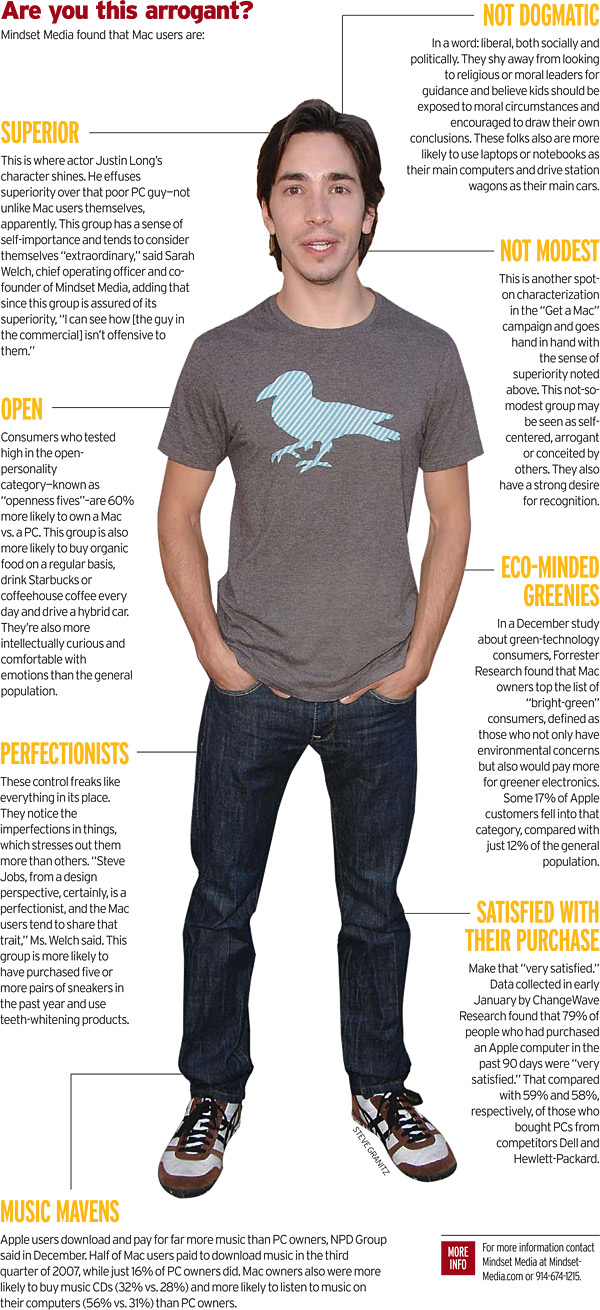

Sent from my iPod