EDIT on 29 Feb 2011:
SSE stands at 2878 today. That's 3.5% off when the comment was made on Nov 2010, and we have 4 more months to see if we will get the 10-15% rise talked about by HSBC...or have they now revised their forecasts to take into account "new realities"?
You know China is HOT when:
A foreigner sitting in a comfy location outside China, who likely does not speak the language, surely does not conduct meetings in Chinese, definitely does not read local papers, talks to Bloomberg like he lived his entire life in China.
Bloomberg News, sent from my iPad.
Worst Plunge in Year for China Stocks is Time to Buy, HSBC Says
Nov. 13 (Bloomberg) -- The worst plunge in China's stocks in more than a year is a buying opportunity for investors as the country's benchmark index may advance as much as 15 percent by June, according to HSBC Private Bank's Arjuna Mahendran.
"The medium-term outlook is good," said Mahendran, the head of investment strategy for Asia in Singapore at HSBC Private Bank, a unit of Europe's largest lender overseeing $460 billion globally. "The momentum of the economy is strong. The question is whether it's too strong."
The Shanghai Composite Index tumbled 5.2 percent to 2,985.44 yesterday, the most since August 2009, as investors speculated policy makers may raise interest rates for the second time in two months to curb inflation. The measure had a six-week winning streak halted after government reports showed October consumer prices rose at the fastest pace in two years.
Consumer prices jumped 4.4 percent in October, more than the 4 percent median forecast in a Bloomberg News survey of 28 economists, the statistics bureau reported Nov. 11. The previous day, the government had announced the first nationwide increase in bank reserve requirements since May, which Guotai Junan Securities Co. said would fail to drain funds from the financial system because there is "too much liquidity."
The Shanghai Composite climbed 1 percent on Nov. 11, the day after the ratio increase, before yesterday's tumble.
"Regulators have been clear they wouldn't condone rising prices," Mahendran said in a phone interview. "Inflation is going to be an issue for the next six to 12 months."
Stay Cautious
While rate "normalization" will be a "headwind" for stocks, Mahendran predicted that China's equity market will extend its rally since July.
"This is an opportunity to buy stocks at decent prices," said Mahendran, who foresaw a decline in China's equities on Jan. 20 and said on July 29 that a mid-year rally in equities would falter should the government be able to contain inflation.
The Shanghai Composite slumped 8.8 percent in January. The gauge rose less than 0.1 percent in August after a 10 percent surge the previous month. Consumer prices jumped 3.5 percent in August, accelerating from July's 3.3 percent increase.
Zhao Zifeng, who helps oversee about $10.2 billion at China International Fund Management Co., said investors should be wary after yesterday's stock tumble given the lack of clarity over the government's tightening policies.
"The plunge may not fully reflect further tightening by the government such as interest-rate and reserve requirement increases," he said in a phone interview in Shanghai. "I would say it's better to be cautious."
Economic Growth
The Shanghai gauge has rebounded 26 percent since reaching this year's low on July 5 on expectations central banks around the world will inject more cash into their economies to boost growth. The index remains down 8.9 percent this year after the government raised bank reserve requirements, including a percentage-point increase for some banks, and curbed lending growth to cool the economy.
Companies in the stock gauge are valued at 19.2 times reported earnings, compared with 26.4 times at the beginning of the year, according to weekly data compiled by Bloomberg.
Mahendran recommends Chinese consumption stocks including retailers given the nation's growth outlook. China's economy grew 9.6 percent in the third quarter, exceeding the 9.5 percent median estimate of economists in a Bloomberg News survey. Moody's Investors Services upgraded China's debt rating this week, citing the resilience of the economy.
"You just have to wait for the dust to settle," he said. "The trend is upward. I'm not too concerned. I see gains for the index of between 10 percent to 15 percent by June next year."
To contact the reporter on this story: Allen Wan at awan3@bloomberg.net .
To contact the editor responsible for this story: Darren Boey at dboey@bloomberg.net .
Find out more about Bloomberg for iPad: http://m.bloomberg.com/iphone
Sent from my iPad
Saturday, November 13, 2010
Friday, November 12, 2010
S'pore may win by a nose in M'sia GDP photo finish
Singapore will win, not now, then next year. But nothing is for free. It has paid a price for this. Published November 12, 2010  | |
S'pore may win by a nose in M'sia GDP photo finish Its economy looks set to surpass Malaysia's US$205b (SINGAPORE) The economy of Singapore is poised to go past Malaysia's in absolute terms. Singapore's gross domestic product (GDP) will cap its fastest annual growth this year since independence, rising as much as 15 per cent to about US$210 billion, while the economy of Malaysia, a country 478 times its size, will expand 7 per cent to US$205 billion, government forecasts show. The nations are scheduled to release their 2010 data by February. The island that former economic adviser Albert Winsemius once said was considered a 'poor little market in a dark corner of Asia' is now ranked by the World Bank as the easiest place to do business, has the world's second-busiest container port, and boasts the highest proportion of millionaire households, according to the Boston Consulting Group. 'Singapore kept on moving to the next level as the world economy evolved and adjusted to market demands and investors' interests,' said Lee Hock Guan, senior fellow at the Singapore-based Institute of Southeast Asian Studies. 'Malaysia was struck by the curse of resource-rich countries: It didn't optimise its human capital.' Singapore's economy has grown 189-fold since independence in 1965, helping boost GDP per capita to US$36,537 last year from US$512. Malaysia's economy expanded at one-third the pace during the same period and had a GDP per capita of US$6,975 in 2009, up from US$335 in 1965. Malaysia's growth fell to an average 4.7 per cent a year in the past decade, from 7.2 per cent in the 1990s, when former prime minister Mahathir Mohamad wooed overseas manufacturers, built highways, and erected the world's tallest twin towers. 'Development is like a marathon and all policies geared toward it must be sustainable and continuous,' said Thomas Lam, chief economist at OSK- DMG, a venture between Malaysian securities firm OSK Holdings Bhd and Deutsche Bank AG. 'Malaysia runs the marathon like a 100 meter event, so you see the initial spurt but not continuous progress in the race.' Much effort has gone into Singapore's growth. 'Economic development does not occur naturally,' said Ravi Menon, a senior official at Singapore's Ministry of Trade and Industry. 'This is where free marketers are disenchanted with Singapore. The government has never hesitated from guiding the development process or intervening in markets where it believes such intervention will lead to superior outcomes.' The government invested about $500 million in its Biopolis biomedical research hub after attracting drugmakers including Pfizer Inc and Novartis AG. It cut corporate tax rates by nine percentage points since 2000 to 17 per cent, compared with 25 per cent in Malaysia. The Malaysian government unveiled an economic transformation programme in September aimed at attracting investment, including US$444 billion of programmes this decade ranging from mass rail to nuclear power, led by private and government-linked companies. Singapore beat 182 economies to take first place in the World Bank's annual ranking of business conditions, which looks at property rights, taxes, access to credit, labour laws, and regulations on customs and licenses. Malaysia climbed two steps to 21st, according to the Nov 4 report. -- Bloomberg |

(BN) Stupidest Lawsuit Ever Has Us Suing Ourselves: Jonathan Weil
Keeps the lawyers and admin busy, keeps their jobs, keeps the economy moving!
Bloomberg News, sent from my iPad.
Stupidest Lawsuit Ever Has Us Suing Ourselves: Jonathan Weil
Nov. 11 (Bloomberg) -- Of all the absurdities to emerge from the government's never-ending bailout of the U.S. financial system, here's a new one that's hard to top: The government, through Freddie Mac, in effect is now suing itself.
Never let it be said that Bailout Nation doesn't have a sense of humor. It would be only a slight hyperbole to say this may be the stupidest lawsuit ever.
Here's what happened. In July the Internal Revenue Service told Freddie Mac, the congressionally chartered housing financier, that it owed $3 billion of back taxes and penalties for the years 1998 through 2005. Rather than pay up, the McLean, Virginia-based company sued the IRS on Oct. 22 in U.S. Tax Court to contest its claims.
Before Freddie Mac could do that, it had to seek written permission from its conservator, the Federal Housing Finance Agency. FHFA, whose mandate is supposed to include looking out for taxpayers, consented. Freddie Mac disclosed the suit last week in a footnote to its third-quarter financial report.
Talk about biting the hand that feeds you. Here we have a government-sponsored enterprise -- which depends on Treasury's financial support to remain solvent -- suing an arm of the Treasury Department. Some thanks this is. To date, Treasury has injected about $64 billion into Freddie Mac and collected $8.4 billion of cash dividends on its senior preferred stock in the company.
The Treasury Department also holds a warrant to buy 79.9 percent of the company's common stock for a nominal price. So Freddie Mac can't claim it's simply protecting shareholders by taking on the IRS. Under its conservatorship, the company's board answers only to the FHFA, which has complete authority over Freddie Mac's affairs.
Lawyers Win
The details of the tax dispute are beside the point. No matter how the case turns out, the result more or less should wind up being a wash for taxpayers. The only people who stand to make money from the litigation are Freddie Mac's outside attorneys at Shearman & Sterling.
Consider some possible scenarios. If the IRS loses, that would be a win for taxpayers in the sense that Treasury won't need to send as much bailout money to Freddie Mac in the future. Yet the public also would lose because the government wouldn't get its $3 billion of revenue.
Alternatively, if the IRS wins, it would be a victory for taxpayers, too. Of course, they would still lose because Freddie Mac would have an even bigger capital hole after paying the $3 billion. The Treasury then would have to inject more money into the company to keep it from becoming insolvent and falling into mandatory receivership.
Matter of Principle
An IRS spokesman, Eric Smith, declined to comment. So did Robert Rudnick, a partner at Shearman & Sterling in Washington. Corinne Russell, an FHFA spokeswoman, declined to comment when I asked why the agency gave Freddie Mac permission to sue the IRS. FHFA's acting director, Edward DeMarco, didn't return phone calls.
A Freddie Mac spokeswoman, Sharon McHale, cast the company's decision to sue the IRS in terms of principle.
"We believe that we did not in prior years have federal tax deficiencies and that we are not liable for any penalties," she said. Freddie Mac, she added, "has an obligation to run the company according to the laws of the land. And in an instance where we believe we're in the right, we believe we have an obligation to assert that."
No Call
OK, fine. But shouldn't it also have been the job of someone in the government to exercise some common sense here? Surely the head of FHFA could have picked up the phone and called someone at Treasury to work out a truce. Or, if that wasn't possible, FHFA could have told Freddie Mac to pay its IRS bill, tap Treasury for more bailout money, and stop ringing up legal fees.
For what it's worth, I checked the disclosures at Freddie Mac's cousin, Fannie Mae, which also was seized by the government in 2008. Fannie Mae reached a settlement with the IRS over its tax returns for 1999 through 2004. Score one for cooler heads.
Freddie Mac said in its latest quarterly report that "it is reasonably possible" the company will reach a settlement with the IRS within the next 12 months. We can only hope.
(Jonathan Weil is a Bloomberg News columnist. The opinions expressed are his own.)
To contact the writer of this column: Jonathan Weil in New York at jweil6@bloomberg.net
To contact the editor responsible for this column: James Greiff at jgreiff@bloomberg.net
Find out more about Bloomberg for iPad: http://m.bloomberg.com/iphone
Sent from my iPad
Thursday, November 11, 2010
In case one forgot what some resorted to overturn their deficits.
The East India Company drove the expansion of the British Empire in Asia. The Company's army had first joined forces with the Royal Navy during the Seven Years' War, and the two continued to cooperate in arenas outside India: the eviction of Napoleon from Egypt (1799), the capture of Javafrom the Netherlands (1811), the acquisition of Singapore (1819) and Malacca (1824) and the defeat of Burma (1826).[80]
From its base in India, the Company had also been engaged in an increasingly profitable opiumexport trade to China since the 1730s. This trade, illegal since it was outlawed by the Qing dynastyin 1729, helped reverse the trade imbalances resulting from the British imports of tea, which saw large outflows of silver from Britain to China.[86] In 1839, the confiscation by the Chinese authorities at Canton of 20,000 chests of opium led Britain to attack China in the First Opium War, and the seizure by Britain of Hong Kong, at that time a minor settlement.[87]
Sent from my iPad
(BN) Hong Kong $230,000 Bid Overtakes London Wine Auctions
What a great way to solve a deficit. Just sell as much wine as you can. And build the casinos too. Remember what the Brits did? They introduced opium to the Chinese. And got hong kong.
Bloomberg News, sent from my iPad.
Hong Kong $230,000 Bid Overtakes London Wine Auctions
Nov. 10 (Bloomberg) -- He Wei Qi, a businessman from eastern China's Zhejiang province, says he routinely pays more than 30,000 yuan ($4,500) for a bottle of wine to entertain guests.
"A price tag of more than a million yuan a bottle -- that does more than show off your wealth, it shows you have good taste," He, 38, said while attending a three-day Hong Kong wine and spirits exhibition that drew about 700 companies from 29 countries and regions. "We don't care how outrageously expensive the wines are."
Wine sales in the city by Sotheby's and Christie's International will raise more than in New York and London combined this year, the top two auction houses said, with vintage Chateau Lafite selling in excess of $200,000 a bottle. Sales at Hong Kong's auctions have more than quadrupled since the city cut duties to zero two years ago.
"What we've seen emerging in the last year are people paying virtually any price for wine," said David Elswood, Christie's London-based head of wine. "That's not investment. That is just uncontrolled spending."
Buyers from China, where the number of billionaires rose more than 60 percent from last year, may double auction sales in Hong Kong next year, he said.
"Red wine is better than stocks," wine merchant Alex Yu said while touting a HK$80,000 ($10,321) 5-litre bottle of Chateau Mouton Rothschild. "Chinese wine lovers are pushing up prices."
Vintage Lafite
Three bottles of Chateau Lafite's 1869 vintage sold for a record $230,000 each on Oct. 29, 28 times Sotheby's top estimate before the auction.
Chinese collectors in Hong Kong, China and Taiwan hold about one in four bottles of fine or rare vintage wine globally, according to Crown Wine Cellars, which stores about HK$1 billion of wine in a network of converted ammunition bunkers in Hong Kong. Total consumption has doubled in China in the past five years, with red wine accounting for 75 percent of demand, according to a March report by Citigroup Inc.
Wine isn't the only product Chinese buyers are mopping up. The fastest growth of any major economy and an appreciating currency have led them to pick up properties in London and artwork in New York. In Hong Kong, mainland Chinese demand drove luxury property prices past the 1997 peak, spurring the government to warn of an asset bubble.
1,400 Percent Markup
Asia's wine market will expand four times faster than the rest of the world, said Robert Beynat, chief executive of wine exhibition organizer Vinexpo Asia Pacific. Much of the growth will come from China, which is the final destination of a "large part" of the wine imported into Hong Kong, he said.
Liu Xue Biao, a wine merchant from Shenzhen, said that wine he buys in Hong Kong for about $3 a bottle can be sold in mainland China for 300 yuan, a 1,400 percent markup. "They are willing to pay just about any price," said Liu, accompanied by two female assistants carrying suitcases for their purchases.
Imports by Hong Kong merchants jumped to $600 million in the first nine months, more than the whole of last year. The value of auctions reached $120 million this year, almost double the $64 million in 2009, according to the government.
Sotheby's had to issue tickets for the first time for its Oct. 29 wine auction at the Mandarin Oriental, when it offered almost 2,000 bottles of Lafite shipped directly from the Bordeaux chateau's cellars.
No Catching Up
The sale beat the auction record for a single bottle set in 1985 in London, when publisher Malcolm Forbes paid 105,000 pounds ($169,000) for a 1787 vintage.
"New York and London aren't going to catch up," said Robert Sleigh, who moved to Hong Kong from New York in August to run Sotheby's Asia wine business. "People like the fact that the wine is here in Hong Kong. You just go and pick it up."
Sotheby's next wine auctions in Hong Kong will take place in January, where it will put on sale the Bordeaux Winebank Collection. The highlights include bottles of Chateau Petrus 2000 and Chateau Lafite Rothschild 2000.
Sotheby's sold $52 million of wine in eight auctions this year in Hong Kong compared with a combined $24 million so far in New York and London, previously the world's biggest- and second- largest markets. The New York-based company had 11 consecutive sold-out wine auctions in the Chinese city.
The Hong Kong sales are an indication of how far mainland Chinese buyers have come since the 1990s, when they would drink Coca-Cola with wine and merchants hawked unwanted vintages to them, said Gregory De'Eb, general manager of Crown Wine Cellars.
"Through their own aggressive tasting, they have built a better knowledge of what suits their palettes," De'Eb said.
'Inflating a Bubble'
While the Chinese are the ninth-largest consumers of wine globally, the spirit accounts for only 2 percent of alcohol drunk in the country, according to Citigroup analysts.
That's changing as wine starts to win favor compared with the traditional Baijiu and Maotai liquor. In 2008, Domaines Barons de Rothschild (Lafite) agreed to develop more than 25 hectares of vines in Shandong province with Citic Group, China's biggest state-owned investment company.
The burgeoning wealth is "inflating a bubble" in wine, said Christie's Elswood. "When you're paying four, five times or even more than the reference price then you have to seriously question the market knowledge of that buyer."
At Sotheby's April 3 auction in Hong Kong, a 12-bottle lot of Chateau Latour 1982 fetched HK$338,800 or $43,649. About two weeks later, New York-based Tribeca Wine Merchants Ltd. ran a newspaper advertisement offering the same for $2,250 a bottle.
"Westerners drink wine slowly as a way of enjoying life," said He, strolling around the Hong Kong exhibition holding a glass of wine. "Just look around you. Mainland Chinese tilt the glass and pour it straight down the throat."
To contact the reporters for this story: Hanny Wan in Hong Kong at hwan3@bloomberg.net Wendy Leung in Hong Kong at wleung12@bloomberg.net
To contact the editors responsible for this story: Frank Longid at flongid@bloomberg.net Darren Boey at dboey@bloomberg.net
Find out more about Bloomberg for iPad: http://m.bloomberg.com/iphone
Sent from my iPad
(BN) Geithner Says Greenspan Wrong, Dollar Fell on Reversal of Flight to Safety
Greenspan as usual, with that incurable itch for his voice to be heard.
Bloomberg News, sent from my iPad.
Geithner Says Dollar Drop Due to Haven-Flow Reversal
Nov. 11 (Bloomberg) -- Treasury Secretary Timothy F. Geithner said the dollar's drop in recent months is due to a reversal in safe-haven capital flows, rebutting former Federal Reserve Chairman Alan Greenspan's assessment of U.S. policy.
Investors are no longer seeking as much of a refuge in dollars, and that's "a sign of greater confidence that although we face challenges in the U.S. and globally the risks we face are more manageable," Geithner said in a transcript of an interview with CNBC television distributed by e-mail today. This shift is "the dominant trend that we see," he said.
The remarks follow criticism from Chinese officials, including Vice Finance Minister Zhu Guangyao on Nov. 8, that the Fed plan to buy $600 billion of Treasuries may "shock" emerging markets by flooding them with short-term capital. German Finance Minister Wolfgang Schaeuble called the Fed "clueless" and Greenspan wrote in the Financial Times today that the U.S. is "pursuing a policy of currency weakening."
"I have enormous respect for Greenspan, had the privilege of working with him for a long period of years but that's not an accurate description of either the Fed's policies or our policies," said Geithner, who arrived in South Korea today to join President Barack Obama in efforts to rally support for U.S. trade initiatives. "We will never seek to weaken our currency as a tool to gain competitive advantage or to grow the economy."
G-20 Talks
Leaders from the Group of 20 nations are deliberating on whether to endorse proposals to refrain from competitive currency weakening and to monitor trade balances for signs that deficits or surpluses are reaching risky levels.
Finance ministers endorsed the plan last month. Since then, nations including Germany and China have criticized what they say is a U.S. push to impose unfair limits while the Fed weakens the dollar.
The Dollar Index, which IntercontinentalExchange Inc. uses to track the dollar against the currencies of six major U.S. trading partners including the euro and yen, slid on Nov. 4 to the lowest level since December 2009. It lost 11 percent versus the yen in the past six months, to 82.17 as of 1:13 p.m. in Tokyo, and 8.2 percent against the euro to $1.3797.
Dollar's Ride
The Dollar Index surged by March 2009 to its highest level since 2006 as the financial crises deepened after the failure of Lehman Brothers Holdings Inc., before retreating by year-end as the world economy recovered from the deepest postwar recession. The American currency strengthened again in the first half of this year as Europe's sovereign-debt crisis undermined the euro.
Geithner said today he's "very confident" the leaders will endorse the framework set out by the finance chiefs.
"We provided a proposal that allows for a cooperative framework to manage through those kinds of things," he said. "You're going to see very broad support for that because, again, it's better than the alternative. Because the alternative is countries want to go their own way and you see the cooperative forces so important in solving the crisis dissipate."
The Treasury secretary also said that China is making progress on allowing a more flexible yuan and that "it's very important to them, and I think they believe this in China too, that they let this process continue."
The yuan has strengthened about 0.7 percent against the dollar since Nov. 8, its biggest three-day advance since a currency peg ended in July 2005. Premier Wen Jiabao's government has kept the gains to about 3 percent since pledging to allow greater flexibility in June.
Inflation Threat
"If you resist those market forces, that pressure is not going to go away," Geithner said, attributing the tendency toward a higher yuan to confidence in the outlook for China's economic growth. "It's just going to end up in higher inflation or higher asset prices and that'll be bad for China."
China's consumer prices climbed 4.4 percent in October from a year before, the most in two years, a government report showed today.
Geithner said tensions arise when emerging-market nations that allow their currencies to rise are "unfairly" penalized by countries like China that limit foreign-exchange rate gains.
"The world is going to be more comfortable, the emerging world, letting their currencies continue to move if they're confident China is going to move," Geithner said. "China will be confident that they can allow this process of gradual appreciation continue, if they know that the countries they compete with are going to let their currencies move up too."
Europe Debt
Geithner also said worries about European sovereign debt woes don't "need to be" a source of global panic. He spoke a day after Irish 10-year government bonds plunged for a 12th straight session, with fixed-income clearing house LCH Clearnet Ltd. demanding its clients place a larger deposit when trading the nation's bonds.
European policy makers "put in place in the summer a very strong set of tools, financial tools, a strong framework they can use to help those countries manage through these problems and I think that leaves it completely in Europe's capacity to manage it carefully," Geithner said.
To contact the reporter on this story: Rebecca Christie in Seoul at rchristie4@bloomberg.net
To contact the editor responsible for this story: Christopher Wellisz at cwellisz@bloomberg.net
Find out more about Bloomberg for iPad: http://m.bloomberg.com/iphone
Sent from my iPad
Bloomberg News, sent from my iPad.
Geithner Says Dollar Drop Due to Haven-Flow Reversal
Nov. 11 (Bloomberg) -- Treasury Secretary Timothy F. Geithner said the dollar's drop in recent months is due to a reversal in safe-haven capital flows, rebutting former Federal Reserve Chairman Alan Greenspan's assessment of U.S. policy.
Investors are no longer seeking as much of a refuge in dollars, and that's "a sign of greater confidence that although we face challenges in the U.S. and globally the risks we face are more manageable," Geithner said in a transcript of an interview with CNBC television distributed by e-mail today. This shift is "the dominant trend that we see," he said.
The remarks follow criticism from Chinese officials, including Vice Finance Minister Zhu Guangyao on Nov. 8, that the Fed plan to buy $600 billion of Treasuries may "shock" emerging markets by flooding them with short-term capital. German Finance Minister Wolfgang Schaeuble called the Fed "clueless" and Greenspan wrote in the Financial Times today that the U.S. is "pursuing a policy of currency weakening."
"I have enormous respect for Greenspan, had the privilege of working with him for a long period of years but that's not an accurate description of either the Fed's policies or our policies," said Geithner, who arrived in South Korea today to join President Barack Obama in efforts to rally support for U.S. trade initiatives. "We will never seek to weaken our currency as a tool to gain competitive advantage or to grow the economy."
G-20 Talks
Leaders from the Group of 20 nations are deliberating on whether to endorse proposals to refrain from competitive currency weakening and to monitor trade balances for signs that deficits or surpluses are reaching risky levels.
Finance ministers endorsed the plan last month. Since then, nations including Germany and China have criticized what they say is a U.S. push to impose unfair limits while the Fed weakens the dollar.
The Dollar Index, which IntercontinentalExchange Inc. uses to track the dollar against the currencies of six major U.S. trading partners including the euro and yen, slid on Nov. 4 to the lowest level since December 2009. It lost 11 percent versus the yen in the past six months, to 82.17 as of 1:13 p.m. in Tokyo, and 8.2 percent against the euro to $1.3797.
Dollar's Ride
The Dollar Index surged by March 2009 to its highest level since 2006 as the financial crises deepened after the failure of Lehman Brothers Holdings Inc., before retreating by year-end as the world economy recovered from the deepest postwar recession. The American currency strengthened again in the first half of this year as Europe's sovereign-debt crisis undermined the euro.
Geithner said today he's "very confident" the leaders will endorse the framework set out by the finance chiefs.
"We provided a proposal that allows for a cooperative framework to manage through those kinds of things," he said. "You're going to see very broad support for that because, again, it's better than the alternative. Because the alternative is countries want to go their own way and you see the cooperative forces so important in solving the crisis dissipate."
The Treasury secretary also said that China is making progress on allowing a more flexible yuan and that "it's very important to them, and I think they believe this in China too, that they let this process continue."
The yuan has strengthened about 0.7 percent against the dollar since Nov. 8, its biggest three-day advance since a currency peg ended in July 2005. Premier Wen Jiabao's government has kept the gains to about 3 percent since pledging to allow greater flexibility in June.
Inflation Threat
"If you resist those market forces, that pressure is not going to go away," Geithner said, attributing the tendency toward a higher yuan to confidence in the outlook for China's economic growth. "It's just going to end up in higher inflation or higher asset prices and that'll be bad for China."
China's consumer prices climbed 4.4 percent in October from a year before, the most in two years, a government report showed today.
Geithner said tensions arise when emerging-market nations that allow their currencies to rise are "unfairly" penalized by countries like China that limit foreign-exchange rate gains.
"The world is going to be more comfortable, the emerging world, letting their currencies continue to move if they're confident China is going to move," Geithner said. "China will be confident that they can allow this process of gradual appreciation continue, if they know that the countries they compete with are going to let their currencies move up too."
Europe Debt
Geithner also said worries about European sovereign debt woes don't "need to be" a source of global panic. He spoke a day after Irish 10-year government bonds plunged for a 12th straight session, with fixed-income clearing house LCH Clearnet Ltd. demanding its clients place a larger deposit when trading the nation's bonds.
European policy makers "put in place in the summer a very strong set of tools, financial tools, a strong framework they can use to help those countries manage through these problems and I think that leaves it completely in Europe's capacity to manage it carefully," Geithner said.
To contact the reporter on this story: Rebecca Christie in Seoul at rchristie4@bloomberg.net
To contact the editor responsible for this story: Christopher Wellisz at cwellisz@bloomberg.net
Find out more about Bloomberg for iPad: http://m.bloomberg.com/iphone
Sent from my iPad
Monday, November 8, 2010
(BN) Return to Frugality Is a Dangerous Transition: Chris Farrell
U got to hold cash if you might outlive your banker.
Bloomberg News, sent from my iPad.
Return to Frugality Is a Dangerous Transition: Chris Farrell
Nov. 8 (Bloomberg) -- "Transitions are dangerous," said the late Charles Kindleberger, an economic historian with a vast knowledge of financial manias, panics and crashes, in 1983. That was No. 9 of 10 lessons he summarized from 1929.
He noted that pursuit of smart public policy in the tumultuous early years of the Great Depression was handicapped by three transitions: The 1928 death of Benjamin Strong, the forceful head of the Federal Reserve Bank of New York, led to power passing to the Federal Reserve in Washington, a more timid group of central bankers; the electoral victory of Franklin D. Roosevelt over the incumbent Herbert Hoover; and the difficult transition of international economic hegemony from the world of Pax Britannica to Pax Americana.
Since economist James Tobin got the Nobel Prize in 1981 for stating "Don't put all your eggs in one basket," Kindleberger said he planned on submitting to the awards committee his one- sentence insight: "Be very careful if you have to change horses."
Kindleberger never got the nod from Oslo, but his admonition rings true a quarter century later. The midterm election is over and the results have changed the balance of power in Washington, with the Republican Party picking up at least 60 seats in the House -- the biggest sweep since 1948. Democrats held on to the Senate, but with a slimmer majority after Republicans picked up at least 6 seats.
Grim Statistics
Voters are understandably angry over the lack of jobs and economic growth. And the news remains grim on the employment front. The 15th month of joblessness over 9.5 percent is the longest such period since government statisticians started collecting the numbers in 1948.
Indeed, the major force behind the slow recovery isn't going away anytime soon: America is turning away from debt and embracing thrift, and the epicenter of change is the household. History suggests that the transition toward a high-saving less- debt balance sheet will be long and painful before vibrant growth resumes.
The Federal Reserve is smartly trying to bolster the economy during the transition from profligacy to thrift with its latest round of quantitative easing, QE2 (a fancy term for printing money). The Fed announced on Nov. 3 that on top of its existing program of reinvesting the proceeds of its portfolio, it will buy $600 billion of long-term government bonds -- $75 billion a month -- by the middle of 2011.
The Great Deleveraging
In the meantime, the message for Capitol Hill and the White House is at minimum "do no harm" while the Great Deleveraging run its course.
Considering the well-publicized extravagance of many CEOs, it's underappreciated just how much money Corporate America has been hoarding during the downturn. Corporations have accumulated almost $1 trillion in cash and equivalents, up 22 percent since 2008, according to an Oct. 27 report by Moody's Investors Service.
Apple Computer Inc. has $51 billion on its balance sheet alone. "The investment opportunities are more limited and most can wait until management is more confident about demand," says Charles Roxburgh, the London-based director of the McKinsey Global Institute.
The recent corporate embrace of cash is really part of a longer-term trend. It started after the economic trauma of the 1970s when companies were battered by one shattering experience after another, from double-digit inflation and interest rates to the two OPEC oil embargos to the U.S. government abandoning the gold standard.
Raising Cash
Even with all the headlines devoted to leveraged buyout buccaneers in the 1980s and private equity financiers in the 2000s, the average cash-to-assets ratio for U.S. industrial firms increased by 129 percent from 1980 to 2004, according to scholars Thomas Bates and Kathleen Kahle of the University of Arizona, Tucson and Rene M. Stulz of Ohio State University.
In "Why Do U.S. Firms Hold So Much More Cash Than They Used To?," the scholars wrote that the creation of the cash hoard has been so dramatic that "on average, American firms could have paid off their debt with their cash holdings."
Now that's thrifty. Many factors combine to create such a degree of corporate frugality, but the most important are the unsettling combination of changing technology, the gale winds of deregulation, and increasingly tough competition from emerging- market companies.
"As economies have become more dynamic the ability of profitable corporations to say five years from now they will still be highly profitable has declined," says Jay Ritter, finance economist at the University of Florida, Gainesville. What's more, companies aren't going to risk that money anytime soon.
Less Household Debt
Now, it's the household's turn to be thrifty. People learned the hard way how financially insecure they had become when the debt bubble burst. There has been progress: According to the Federal Reserve Bank of New York, U.S. households have reduced their debts over the past seven quarters. In the second quarter of this year households owed $11.7 trillion, down 6.5 percent from the peak reached in the third quarter of 2008. (The next report on total household debt is released on Nov. 8.) The personal savings rate as a percent of disposable income in September was 5.3 percent, the Bureau of Economic Analysis said on Nov. 1. That's significantly higher than the low of 0.8 percent reached in April 2005.
Still Not Healthy
Still, Americans have a long way to go before their personal finances are healthy. For instance, total household debt equaled 118.4 percent of after-tax income in the second quarter of 2010, according to Christian Weller, senior fellow at the Center for American Progress, a progressive-oriented think tank in Washington. That's down from a record high of 130.2 percent in the first quarter of 2008 but well above the 100 percent figure of the early 2000s, let alone the 60 percent to 80 percent of the late 1950s to the early 1990s.
Of course, there is no magic debt ratio. Nevertheless, a recent study published in the September 2010 BIS Quarterly Review is suggestive. A look at private sector debt after 17 of the 20 systemic banking crises examined Gary Tang and Christian Upper of the Bank for International Settlements suggests that the trend toward deleveraging the U.S. household at best may be only one quarter complete.
It's also why the pressure on government to reduce its debt won't go away. The Republican resurgence and fulfilling a major campaign promise is one factor, of course. But an even more important reason is that households are struggling for greater thrift. They will insist that government also embrace a new frugality.
Beyond Austerity
Even economists that scorn calls for government austerity at the moment call for reduced debt levels tomorrow. "The deleveraging still has a long way to go for consumers," says Roxburgh. "The U.S. government's deleveraging hasn't started yet."
The return to frugality isn't fun. The transition is definitely painful. Yet an economy with a healthier savings cushion and a greater reliance on equity financing is a society with the financial wherewithal to take greater risks. The great deleveraging offers the prospect that thrifty companies, households and government will create the foundation for a more prosperous, innovative economy.
Yet, as Kindleberger noted, transitions are dangerous. Washington can ease the burden of the great deleveraging by heeding the sage's Lesson No. 8: "Formalism, politics and ideology impede crisis-solution."
Forget calls to default on the government's debt when the debt limit ceiling is reached in coming months. Gridlock is not good public policy. The time for posturing is over. And the opportunity for devising a realistic plan for bringing down the federal debt over time comes when the Bipartisan Policy Center's Debt Reduction Task Force releases its suggestions on Nov. 17.
And any debt-reduction blueprint policy makers embrace should keep in mind that the American household is deleveraging, but it going to take time -- a long time to reach a better balance.
(Chris Farrell is a Businessweek.com columnist. A version of this column appears on Businessweek.com. The opinions expressed are his own.)
To contact the writer of this column: Chris Farrell at cfarrell@mpr.org .
To contact the editor responsible for this column: William Andrews in New York at wandrews7@bloomberg.net
Find out more about Bloomberg for iPad: http://m.bloomberg.com/iphone
Sent from my iPad
(BN) Myanmar Awaits Results of Vote That Would End 22 Years of Military Rule
How do you get from junta to democracy in one step peacefully?
Bloomberg News, sent from my iPad.
Myanmar Awaits Results of Vote Ending Military Rule
Nov. 8 (Bloomberg) -- Myanmar citizens awaited results of an election that brings a multi-party parliament to the country for the first time since 1962 even as Aung San Suu Kyi and some 2,100 other political prisoners remain detained.
Myanmar has been placed under a 90-day state of emergency that prevents political gatherings and stops soldiers from leaving the military for three months, ABC News reported.
The U.S., Canada and the U.K. condemned the vote, the first since Suu Kyi's party won a landslide victory two decades ago in a result nullified by the junta. Two parties comprised of rival military factions are the frontrunners to control Parliament and submit presidential nominees, a process that ends 22 years of military rule.
"Serving military officers, former military officers and democrats will all be sitting around the table," Khin Zaw Win, an independent academic who was imprisoned for 11 years until 2005, told reporters in Bangkok by phone from Yangon, Myanmar's former capital. "That's quite an achievement for a country that has been so bitterly divided over the years."
The election and formation of a new government may prompt Western nations to reassess economic sanctions as Myanmar's Asian neighbors welcome the vote. China, India and Thailand are spending money on ports, railways and oil and gas pipelines that give them access to natural resources in the country formerly known as Burma and trade routes in the Indian Ocean.
'Neither Free nor Fair'
The elections "were neither free nor fair," U.S. President Barack Obama, visiting India on the first stop in a four-country trip, said in a statement yesterday. Secretary of State Hillary Clinton, traveling in Australia, reiterated a U.S. push to establish an international Commission of Inquiry to hold junta leaders accountable for human rights violations.
Suu Kyi, 65, may be released on Nov. 13 and will visit supporters around the country "as soon as possible" if she's freed, Win Tin, a senior member of her party, told reporters yesterday by phone from Yangon. The Nobel laureate has been detained for 15 of the past 21 years, with her latest house arrest starting in 2003.
Considering Sanctions
Suu Kyi "is ready to consider the economic sanctions," said Win Tin, who spent 19 years in prison before his 2008 release. "First she would like to see what kind of sanctions are there and how they affect people's lives."
Than Nyein, 73, a former member of Suu Kyi's party who heads the National Democratic Front party, said her plan to boycott the election "miserably failed." The former political prisoner expected a "comfortable" number of his colleagues in the next Parliament while saying election officials instructed voters to cast ballots for the junta-backed party.
The military will retain a quarter of seats in two houses of Parliament, according to the constitution. Elected lawmakers in both houses will each be able to nominate a presidential hopeful to compete against the candidate picked by military- appointed legislators.
Junta leader Than Shwe backs the Union Solidarity and Development Party, which claims a third of the population as members. Its main challenger is the National Unity Party, a group loyal to former dictator Ne Win, who led a 1962 coup and established one-party rule until Than Shwe's group took power following a pro-democracy uprising in 1988.
The USDP and NUP ran more than twice as many candidates as the 35 other parties, making a 1990s-style win for the pro- democracy parties "statistically impossible," according to Richard Horsey, an independent political analyst who had worked with the International Labor Organization in Myanmar. The NUP will probably hold the balance of power in Parliament, he said.
Not a Facsimile
While the ensuing government would be dominated by "conservative, authoritarian-leaning nationalism," Horsey wrote in a pre-election report, "it would certainly not be merely a facsimile of the present regime in civilian clothing."
State-run MRTV showed Than Shwe and second-in-charge Muang Aye casting ballots dressed in military uniform. The votes will be counted at each polling station in the presence of candidates, after which the results will be announced.
The government banned most overseas journalists and diplomats from entering Myanmar to observe the election and rejected United Nations assistance in organizing the vote. U.K. Foreign Secretary William Hague said the election "will mean the return to power of a brutal regime," while the European Union called on authorities "to ensure that these elections mark the start of a more inclusive phase."
Banks as Target
The U.S. maintains trade and financial sanctions against the regime, and legislators are pushing the Obama administration to start targeting banks that hold offshore accounts for junta leaders. Europe has less stringent restrictions in place.
Italian-Thai Development Pcl, Thailand's biggest construction company, signed an $8.6 billion contract last week with Myanmar to build a deep-sea port and industrial estate. Earlier this year, China National Petroleum Corp. started building oil and gas pipelines across the country, and India approved plans for Oil & Natural Gas Corp. and GAIL India Ltd. to invest a combined $1.3 billion in a natural gas project.
Western countries want "a greater dialogue among countries, including those that are investing in Myanmar, to find common ground to put pressure on the regime to treat its population better," Ron Hoffmann, Canada's ambassador to Myanmar, said in Bangkok after the vote. "It's a long road ahead though and it's not going to be easy."
To contact the reporter on this story: Daniel Ten Kate in Bangkok at dtenkate@bloomberg.net .
To contact the editors responsible for this story: Bill Austin at billaustin@bloomberg.net
Find out more about Bloomberg for iPad: http://m.bloomberg.com/iphone
Sent from my iPad
Bloomberg News, sent from my iPad.
Myanmar Awaits Results of Vote Ending Military Rule
Nov. 8 (Bloomberg) -- Myanmar citizens awaited results of an election that brings a multi-party parliament to the country for the first time since 1962 even as Aung San Suu Kyi and some 2,100 other political prisoners remain detained.
Myanmar has been placed under a 90-day state of emergency that prevents political gatherings and stops soldiers from leaving the military for three months, ABC News reported.
The U.S., Canada and the U.K. condemned the vote, the first since Suu Kyi's party won a landslide victory two decades ago in a result nullified by the junta. Two parties comprised of rival military factions are the frontrunners to control Parliament and submit presidential nominees, a process that ends 22 years of military rule.
"Serving military officers, former military officers and democrats will all be sitting around the table," Khin Zaw Win, an independent academic who was imprisoned for 11 years until 2005, told reporters in Bangkok by phone from Yangon, Myanmar's former capital. "That's quite an achievement for a country that has been so bitterly divided over the years."
The election and formation of a new government may prompt Western nations to reassess economic sanctions as Myanmar's Asian neighbors welcome the vote. China, India and Thailand are spending money on ports, railways and oil and gas pipelines that give them access to natural resources in the country formerly known as Burma and trade routes in the Indian Ocean.
'Neither Free nor Fair'
The elections "were neither free nor fair," U.S. President Barack Obama, visiting India on the first stop in a four-country trip, said in a statement yesterday. Secretary of State Hillary Clinton, traveling in Australia, reiterated a U.S. push to establish an international Commission of Inquiry to hold junta leaders accountable for human rights violations.
Suu Kyi, 65, may be released on Nov. 13 and will visit supporters around the country "as soon as possible" if she's freed, Win Tin, a senior member of her party, told reporters yesterday by phone from Yangon. The Nobel laureate has been detained for 15 of the past 21 years, with her latest house arrest starting in 2003.
Considering Sanctions
Suu Kyi "is ready to consider the economic sanctions," said Win Tin, who spent 19 years in prison before his 2008 release. "First she would like to see what kind of sanctions are there and how they affect people's lives."
Than Nyein, 73, a former member of Suu Kyi's party who heads the National Democratic Front party, said her plan to boycott the election "miserably failed." The former political prisoner expected a "comfortable" number of his colleagues in the next Parliament while saying election officials instructed voters to cast ballots for the junta-backed party.
The military will retain a quarter of seats in two houses of Parliament, according to the constitution. Elected lawmakers in both houses will each be able to nominate a presidential hopeful to compete against the candidate picked by military- appointed legislators.
Junta leader Than Shwe backs the Union Solidarity and Development Party, which claims a third of the population as members. Its main challenger is the National Unity Party, a group loyal to former dictator Ne Win, who led a 1962 coup and established one-party rule until Than Shwe's group took power following a pro-democracy uprising in 1988.
The USDP and NUP ran more than twice as many candidates as the 35 other parties, making a 1990s-style win for the pro- democracy parties "statistically impossible," according to Richard Horsey, an independent political analyst who had worked with the International Labor Organization in Myanmar. The NUP will probably hold the balance of power in Parliament, he said.
Not a Facsimile
While the ensuing government would be dominated by "conservative, authoritarian-leaning nationalism," Horsey wrote in a pre-election report, "it would certainly not be merely a facsimile of the present regime in civilian clothing."
State-run MRTV showed Than Shwe and second-in-charge Muang Aye casting ballots dressed in military uniform. The votes will be counted at each polling station in the presence of candidates, after which the results will be announced.
The government banned most overseas journalists and diplomats from entering Myanmar to observe the election and rejected United Nations assistance in organizing the vote. U.K. Foreign Secretary William Hague said the election "will mean the return to power of a brutal regime," while the European Union called on authorities "to ensure that these elections mark the start of a more inclusive phase."
Banks as Target
The U.S. maintains trade and financial sanctions against the regime, and legislators are pushing the Obama administration to start targeting banks that hold offshore accounts for junta leaders. Europe has less stringent restrictions in place.
Italian-Thai Development Pcl, Thailand's biggest construction company, signed an $8.6 billion contract last week with Myanmar to build a deep-sea port and industrial estate. Earlier this year, China National Petroleum Corp. started building oil and gas pipelines across the country, and India approved plans for Oil & Natural Gas Corp. and GAIL India Ltd. to invest a combined $1.3 billion in a natural gas project.
Western countries want "a greater dialogue among countries, including those that are investing in Myanmar, to find common ground to put pressure on the regime to treat its population better," Ron Hoffmann, Canada's ambassador to Myanmar, said in Bangkok after the vote. "It's a long road ahead though and it's not going to be easy."
To contact the reporter on this story: Daniel Ten Kate in Bangkok at dtenkate@bloomberg.net .
To contact the editors responsible for this story: Bill Austin at billaustin@bloomberg.net
Find out more about Bloomberg for iPad: http://m.bloomberg.com/iphone
Sent from my iPad
Sunday, November 7, 2010
The Performance of Mutual Funds
The Performance of Mutual Funds
By Bill Barker
The February 1999 issue of SmartMoney Magazine saw fit to phrase the
question on the minds of 1998's mutual fund investors in these words:
question on the minds of 1998's mutual fund investors in these words:
"How could the market be up 22% in 1998 and my returns be only half that?"
"Why, you ask, do all my mutual funds suck?"
While we Fools hesitate to endorse the crude language employed by
SmartMoney, we cannot help but be enthused that such a publication is
asking the right question. And so succinctly.
SmartMoney, we cannot help but be enthused that such a publication is
asking the right question. And so succinctly.
But it wasn't just in 1998 that investors should have been directing
such epithets toward their mutual funds. For many years now the record
for equity mutual funds has not been good. Though countless millions
of dollars of shareholders' money is spent annually by mutual funds
promoting themselves and the notion that they have "expert" stock
pickers, the sad truth (or the funny truth, if you're in a laughing
mood) is that the vast majority of mutual funds underperform the
returns of the stock market (as represented by the S&P 500 index).
Because of their excessive annual fees and poor execution,
approximately 80% of mutual funds underperform the stock market's
returns in a typical year. Over the past couple of years, that number
has been going up, as mutual funds have been raising their fees to
even higher levels.
such epithets toward their mutual funds. For many years now the record
for equity mutual funds has not been good. Though countless millions
of dollars of shareholders' money is spent annually by mutual funds
promoting themselves and the notion that they have "expert" stock
pickers, the sad truth (or the funny truth, if you're in a laughing
mood) is that the vast majority of mutual funds underperform the
returns of the stock market (as represented by the S&P 500 index).
Because of their excessive annual fees and poor execution,
approximately 80% of mutual funds underperform the stock market's
returns in a typical year. Over the past couple of years, that number
has been going up, as mutual funds have been raising their fees to
even higher levels.
The average actively managed stock mutual fund returns approximately
2% less per year to its shareholders than the stock market returns in
general. There is currently no reason to believe that this
differential will improve, or that actively managed mutual funds as a
group can ever outperform the stock market's average returns. For that
reason, investors who are going to invest in mutual funds rather than
in individual stocks should hold a very, very, very strong bias toward
investing in index funds, which invest across the board in a stock
market index.
2% less per year to its shareholders than the stock market returns in
general. There is currently no reason to believe that this
differential will improve, or that actively managed mutual funds as a
group can ever outperform the stock market's average returns. For that
reason, investors who are going to invest in mutual funds rather than
in individual stocks should hold a very, very, very strong bias toward
investing in index funds, which invest across the board in a stock
market index.
The costs of being in the average actively managed mutual fund over
time are, put simply, very, very severe. Although 2% may not sound
like that much of a differential when the market is returning roughly
20% per year as it has from 1995 through 1998, the standard returns
for the stock market historically are closer to 10%. Consider whether
this is severe enough for you: over 50 years, a $10,000 investment
will compound to $1,170,000 at 10% returns per year, but to only
$470,000 at 8% per year.
time are, put simply, very, very severe. Although 2% may not sound
like that much of a differential when the market is returning roughly
20% per year as it has from 1995 through 1998, the standard returns
for the stock market historically are closer to 10%. Consider whether
this is severe enough for you: over 50 years, a $10,000 investment
will compound to $1,170,000 at 10% returns per year, but to only
$470,000 at 8% per year.
Vanguard founder John Bogle looks at these numbers and says: "[O]ur
hypothetical fund investor has earned $1,170,000, donated $700,000 to
the mutual fund industry, and kept the remainder of $470,000. The
financial system has consumed 60% of the return, the fund investor has
achieved but 40% of his earnings potential. Yet it was the investor
who provided 100% of the initial capital; the industry provided none.
Confronted by the issue in this way, would an intelligent investor
consider this split to represent a fair shake? Merely to ask the
question is to answer it: 'No.'"
hypothetical fund investor has earned $1,170,000, donated $700,000 to
the mutual fund industry, and kept the remainder of $470,000. The
financial system has consumed 60% of the return, the fund investor has
achieved but 40% of his earnings potential. Yet it was the investor
who provided 100% of the initial capital; the industry provided none.
Confronted by the issue in this way, would an intelligent investor
consider this split to represent a fair shake? Merely to ask the
question is to answer it: 'No.'"
What explains this differential in performance between the stock
market and the mutual funds that invest in the stock market? You would
think that all these sartorially splendid MBA-grad mutual fund
managers who are selected daily by the Wise financial media to tell us
how we should invest our money could pick some reasonable stocks every
once in a while. That's their job after all, right? Nobody would want
to fail in their job as much as mutual fund managers apparently do, so
what's going on here? Is it because managers of mutual funds are
actually bad stock-pickers? And, by the way, who's this John Bogle,
and what's really so great about an index fund?
market and the mutual funds that invest in the stock market? You would
think that all these sartorially splendid MBA-grad mutual fund
managers who are selected daily by the Wise financial media to tell us
how we should invest our money could pick some reasonable stocks every
once in a while. That's their job after all, right? Nobody would want
to fail in their job as much as mutual fund managers apparently do, so
what's going on here? Is it because managers of mutual funds are
actually bad stock-pickers? And, by the way, who's this John Bogle,
and what's really so great about an index fund?
CHEAH CHENG HYE, 'Warren Buffett of the East'
December 21, 2009
CHEAH CHENG HYE, 'Warren Buffett of the East'
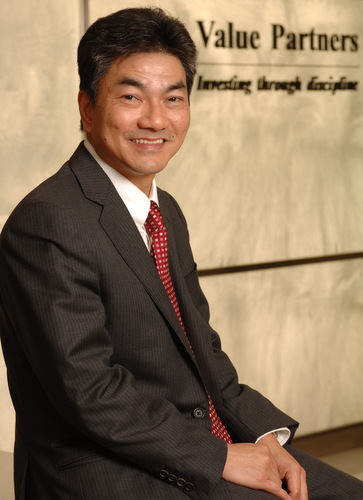


IT’S NOT often, if at all, that a fund manager declares that his company has made mistakes in a third of its investment decisions. But that’s what Mr Cheah Cheng Hye, 54, said in a matter-of-fact way during a recent teleconference with Singapore journalists from his Hong Kong office.
“We are far from infallible. I’ve done a study of our decision-making process going back to 1993 and found that one third of the time, we made mistakes. One third were good moves and one third were neutral.”
Now, that may sound like a fund manager which any investor looking for a place to park his money should quickly cross off his list. After all, error rates of that proportion are unheard of in any other industry.
But in equity investing, it is stellar performance if you make lots of money on the decisions that turned out fine and lost not too much on those that went sour.
That is the case for Mr Cheah, co-founder of Value Partners. The asset management firm is listed on the mainboard of the Hong Kong Stock Exchange and had a market capitalization of about HK$4 billion as of early February this year. In 2007 and 2008, it was rated as the second largest hedge fund manager in Asia by Alpha Magazine.
Not for nothing has Mr Cheah, who owns 36 per cent of Value Partners and is its chairman and chief investment officer, been billed as the ‘Warren Buffett of the East’ by some media in Hong Kong
It has attracted money from all over the world. The United States and Europe account for 40 per cent of the US$3.2 billion assets under management. Hong Kong accounts for about 50 per cent while China and the rest of Asia, 7 per cent.
In terms of client categories, about 82 per cent of all the assets under management came from institutions such as insurance companies, banks and conglomerates. The institutional bias helps explain why net redemption for Value Partners’ funds was only 4 per cent in the first nine months of 2008. Value P
The sparkling performance numbers: Value Partners has delivered a 16 per cent per annum compounded gain to its clients since 1993 when it was founded. In the last 10 years, including the disastrous 2008, the gain was 20.3 per cent a year compounded.
’ impressive numbers have
On a yearly basis, Value Partners Classic Fund has made money in 12 out of the last 16 years of its existence. Last year was one of those four terrible years. The fund lost 47.9 per cent net – and that’s after selling down some stocks ahead of the crisis turning full blown.
Mr Cheah said: “We sold down China shares towards the end of 2007 because we couldn’t find any good ideas but we didn’t anticipate such a big global financial crisis was coming. We were shocked.”
Image
Recognition in recent years for Value Partners.
Last year aside, why is that intense analysis of reams of financial statements, lots of visits to companies and interviews with management can still lead an investor like Value Partners to make wrong conclusions about some stocks?
In Mr Cheah’s words: corporate governance. Yes, this has been one sticking issue plaguing China stocks, especially the mainland-listed ones. S-chips in Singapore have not been spared either.
Said Mr Cheah: “If you isolate the mistakes of Value Partners, the single largest reason we find is our poor judgment of management’s integrity and quality. We thought the guy was honest but he turned out to be a crook.”
Value Partners’ track record has not improved in recent years. “Unfortunately no. But it’s not deteriorating either. It’s as bad or as good as before,” said Mr Cheah in yet another moment of his endearing tell-it-like-it-is way of talking.
“We really try hard to improve. I have even appointed myself as the QC (quality control) guy. If my fund managers want to buy beyond a specific amount, they need my approval. But it doesn’t seem to help. It could be like illnesses – the causes are many and if you fix a flu, the next thing that happens may be a stomach ache.”
He agreed to a suggestion that there’s randomness in the market, adding: “Yes, and the bad guys also come up with new ways to fool you!”
Image
Cheah Cheng Hye
At a deeper level, there is something about how Chinese society has evolved that helps to explain further the relatively low level of corporate governance in China, particularly in the small and mid-cap stock segments which Value Partners invests in.
As Mr Cheah put it: “We are talking about a generation of people who are in their 40s and 50s now and are captains of industry. They came out of the Cultural Revolution when values collapsed. These are people who don’t necessarily want to play by the book.”
It’s something that could go away, or diminish, over time. “As they get richer and have more at stake – in terms of reputation and wealth – they would be less and less naughty. They want to be more and more respectable, which means our stock investing risks go down.”
The corporate governance challenge is not absent but is far less pressing when it comes to investing in China companies listed in Hong Kong. “It is a well regulated market. People have learnt the hard way that it makes no sense to ‘play a fool’ with Hong Kong regulators, as they will come down hard on you,” said Mr Cheah.
Whether it’s China stocks or any other stocks, should equities figure in one’s investment portfolio in these treacherous times? “The average investor should only put a proportion of his money into equities. I believe that the potential risk-versus-opportunity situation today does not encourage an all-equity approach,” said Mr Cheah.
“For myself, I would want to have a spread of money in cash, tangible assets like gold, and equities spread across different classes and geographic regions. No one can predict with any certainty what the world will be like two to three years from now.”
Value Partners has made good money on the China story in the last 16 years, and the story continues to be seductive to Mr Cheah.
“For the proportion of your money that is invested in equities, I believe it should be in China-related stocks. I look at the map of the world and I’m unable to find any other major equity market that excites me or fills me with hope. This is a market I know very well: I have devoted 20 years of my life to it.”
Image
As at Apr 29. Source: HSBC Institutional Trust Services (Asia) and Bloomberg, in USD, NAV to NAV, with dividends reinvested. Net of all fees.
And among the important things that he is sure of, it is that the renminbi is going to resume its rise. “It will go up because America wants it to go up and because it’s in China’s self-interest for it to go up. You don’t want to go out of your way to annoy the US and if it’s not against your self-interest, why not let it rise? This is also one of the ways that China can help stimulate domestic consumption.”
To nudge home his point, Mr Cheah added: “I’ll buy you lunch if the renminbi is not higher next year than where it is today.”
The China story looks strong for the medium term at least, though the global financial crisis is not likely to go away anytime soon, he said. “You will see numbers for China getting more encouraging. The worst may be over. China can afford to spend its way out of the present problem.”
The over-stocking of raw materials in China in the middle of last year to fuel an economic boom has now given way to drawn-down inventories. Imports of iron ore and coal are picking up again.
“China stocks have now discounted miles of bad news, real or otherwise. If you accept that China is going to grow 8 per cent this year, there are many businesses that will benefit from it. We are active buyers. We are surprised that it’s difficult to get sufficient supply of stocks at certain levels. It’s a bullish thing to note.”
In the longer-term, China has to reinvent is economy from being export-dependent to being underpinned by domestic demand. The country’s policy direction is pushing China banks to lend out more money, which could sow the seeds of bad loans in two or three years from now, according to Mr Cheah.
Even as it keeps an eye on the far future, Value Partners continues to do a lot of legwork to uncover gems of stocks. Last year was no different. “In the last couple of years, we have done about 2,000 company visits a year – excluding phone calls. We have done this in good and bad times. We have 18 full-time professionals, whose average age is in the early 30s. As far as I know, we do more company visits than any China team in the world.”
Value Partners deems itself to be a value investor seeking stocks with low price-earnings ratios and high dividend yields of at least five per cent. Whichever industry it finds such stocks, it will buy them.
“We don’t limit our stock picks to any industry. Our job is to buy the 3Rs – the right business run by the right people and selling at the right price. At the moment we are finding the 3Rs in a broad spectrum of businesses across China.”
According to Bloomberg data, among the S-chips that Value Partners owns are China Lifestyle (35 million shares), Pacific Andes (91.4 million shares) and China Essence (22.8 million shares) as at the time of writing in mid-February.
Value Partners looks prudently managed: It has over HK$500 million parked in fixed deposits, zero debt, and its fixed overhead expenses are covered by management fees that it collects by more than two times over.
Value Partners is an actively managed fund that charges a management fee and performance fee. Mr Cheah suggested that investors who are ‘fee-sensitive’ could turn to index funds invested in China stocks and passively track China market indices.
Those who want to invest directly in equities should go for large-cap stocks because these are more liquid than small caps. There is also far less likelihood of big companies being led by crooked management.
Image
Source: Value Partners.
Being successful in spotting gems of stocks has made Mr Cheah far wealthier than he could possibly have dreamed of when young. After his father died when he was 12, he and his two brothers had to support their mother. “We were the poorest of the poor,” he said.
While attending Penang Free School, a top-notch institution, he sold pineapples by the roadside in his free time. He quit school after his 0-level because he could not afford to continue his education, not unlike many of his peers.
Mr Cheah worked as a reporter at The Star in Penang before moving to Singapore to the now defunct Singapore Monitor. His journalistic career next took him to, among others, Far Eastern Economic Review and the Asian Wall Street Journal in Hong Kong.
His standout moments included breaking the news in 1983 that Hong Kong was planning to peg its currency to the U.S. dollar, and covering the fall of Philippines president Ferdinand Marcos in 1986 and revealing that the country’s central bank had been tampering with its financial records.
Former journalist in Singapore, meets Hsieh Fu Hua in HK
One day, his life took a major turn when he was introduced to Mr Hsieh Fu Hua, then the head of Asian investment bank Morgan Grenfell, and now CEO of the Singapore Exchange.
It was one of many lucky breaks in his life. “I didn’t have any master plan or ambition. The downside for me as a result of going to Morgan was low as I could always return to my journalist job.’
Image
Cheah Cheng Hye
But he reckoned he could wing it as there is a huge overlap between financial journalism and equities market analysis. With that, he joined Morgan in 1989 as head of research, focusing on mid and small caps. For the technical stuff he was not good at, he let younger and more qualified subordinates to handle.
“As a former journalist, I had an advantage over people who were purely financial people. I learnt to put events in a historical, political and social context. Many people with CFAs or MBAs are narrow in that they tend to interpret reality through quantitative and statistical analysis.”
Another lucky break led him to something really big in his life. He had acted as a consultant to the family business of Mr Yeh V-Nee, now 49. The two went on to join forces and launch Value Partners in 1993 with US$3 million from their savings and contributions from friends and former clients.
He may attribute a lot of his success to lucky breaks, but Mr Cheah has a trait that helped a lot too. “I am an expert in learning how to learn. I learn things very quickly,” he said. “I am self-motivated and I see life as an adventure for my intellect and career. I have a permanent restlessness and a desire to conquer new fields.”
If there’s one area he hasn’t quite succeeded in, it’s learning Mandarin. “My Mandarin is no good. I have a vocabulary of probably only 2,000 words. I took tuition but have seldom stayed more four or six months in any particular class before dropping out.
Image
Chrissy Teng, MD of Value Partners' office in Singapore.
”I’d need someone’s help to translate anything that’s elaborate. In recent years, thankfully, it has become more common for me to encounter people in China who are eager to speak English.”
One thing he had little time to talk about was his lifestyle. Ms Chrissy Teng, the managing director of Value Partners’ office in Singapore, offered some insights, saying that Mr Cheah, who likes golf, is married with two sons aged seven and nine.
He is into meditation to relieve any stress he might experience and to help him maintain clarity of thought. For the last 10 years, he has meditated for an hour almost daily before going to sleep. On plane journeys, and that’s pretty frequent, he would meditate too.
Reflecting his deep desire to learn, his signature from high school days has been a stylized form of the word ‘learn’.
Mr Mark Lee, a director of Hong Kong-based Aries Consulting which organised the teleconference, observed: “Mr Cheah is unassuming. He does not try to impress. At least that’s my impression after I was with him in his office for more than an hour. That day, he was wearing a "Crocodile" brand sweater. Probably his style is to go for value for money, instead of expensive fashion.”
For his part, Mr Cheah said that unlike most people who sought to make as much money as possible, he “had always come from the opposite angle - that you must be passionate about what you do and be very good in it. The money will come naturally.”
This article appeared recently in Pulses magazine and is reproduced here with permission.
Saturday, November 6, 2010
(BN) BMW to Build Hybrid Supercar Matching M6's Power With 70% Lower Emissions
Catered to the environmentally conscious reckless daredevil, if any.
Bloomberg News, sent from my iPad.
BMW to Begin Selling First Hybrid Supercar in 2013
Nov. 5 (Bloomberg) -- Bayerische Motoren Werke AG, the world's largest maker of luxury autos, will build its first hybrid supercar as part of a broader effort to create more fuel- efficient vehicles and underline its technological prowess.
The Vision Efficient Dynamics model, which accelerates to 100 kilometers per hour (62 miles) in 4.8 seconds while emitting 99 grams of carbon dioxide per kilometer, will go on sale in 2013, the Munich-based carmaker said today at an event in Leipzig, Germany. The car will be priced below the company's Rolls-Royce models, development chief Klaus Draeger said.
Chief Executive Officer Norbert Reithofer is developing the hybrid supercar and the electric-powered Megacity auto to help meet tighter environmental regulations and to boost sales to 2 million vehicles by 2020 from 1.4 million this year. The new sports car, which has doors that open upwards, is powered by a three-cylinder diesel engine and two electric motors.
"It's important for BMW to communicate even small progress to cement its perceived role as a leader in hybrid and environmental technology," said Juergen Pieper, an analyst at Bankhaus Metzler in Frankfurt who recommends buying the shares. "It would help if they're the first to sell such cars. But it's going to take a while to make them count in terms of earnings."
BMW closed little changed today in Frankfurt at 54.06 euros. The stock has gained 70 percent this year, valuing the carmaker at 34.5 billion euros ($48.5 billion).
Speedy Acceleration
BMW's hybrid sports car will have a similar acceleration rate to BMW's M6 supercar, while emitting just 30 percent of the M6 coupe's CO2 per kilometer, according to BMW's website. The M6's starting price in the U.S. is $102,350.
The carmaker targets "significant" sales volumes for the Vision Efficient Dynamics and will make it available on all major markets as BMW aims to steal customers from competitors' models, Draeger said.
"I expect a very considerable share of conquests," he said. "We want to achieve a certain market presence with the car and so can't limit production to one car a day."
Porsche SE, which is combining with Volkswagen AG, plans to produce a 918 Spyder hybrid sports car, which features carbon fiber-reinforced plastics to reduce weight and emissions, spokesman Eckhard Eibel said. The carmaker hasn't decided when the car will go on sale or what the price will be, he added.
SLS Electric Car
Daimler AG's Mercedes-Benz currently doesn't intend to make hybrid sports cars but will offer hybrid versions of its S-, E-, and C-Class models and its off-road vehicles. An electric version of its SLS gull-wing sports car with aluminum and plastic components will probably be built and a market introduction by 2013 is realistic, spokeswoman Eva Wiese said.
The Vision Efficient Dynamics will be made in Germany, Reithofer said today at the Leipzig plant. BMW may use a gasoline engine in markets like China and the U.S., where diesel engines aren't popular, Draeger said.
BMW will invest 530 million euros to set up production of the electric Megacity car. The investments include a new carbon- fiber factory in the U.S. and a 400 million-euro expansion of its Leipzig factory.
The Megacity, BMW's first battery-powered auto, will be sold under a new sub-brand when it reaches showrooms in 2013. Passengers in the four-seat car, designed for urban driving, will be protected by a carbon-fiber safety cell, similar to a Formula 1 race car.
Sales for the Megacity will be "sizable" and the model will cost less than 60,000 euros, Draeger said.
Competing Plans
The company is designing the Megacity as an electric-only car, saying that a distinct architecture is necessary for battery-powered driving. Daimler, by contrast, is developing vehicles that can be powered with combustion engines or electric motors on the same platform.
BMW is using carbon fiber, which is 50 percent lighter than steel, to reduce weight and enable a smaller, less costly battery to power the vehicle. BMW and SGL Carbon SE, the world's biggest manufacturer of carbon and graphite products, are building a $100 million factory in Moses Lake, Washington, to make the material for the Megacity models.
Daimler plans to begin using carbon-fiber parts in mass- production cars starting in 2012, spokeswoman Wiese said. Production methods for the material are being developed together with Tokyo-based Toray Industries Inc., she added.
The Vision Efficient Dynamics hybrid sports car was first introduced at the Frankfurt auto show in 2009. It has a height of 1.24 meters (4.1 feet) and seats four people.
The car may lose its transparent doors in the final production version because of demands for speakers and arm rests, designer Benoit Jacob said in an interview today.
"The idea is to express transparency but it remains to be seen how that's interpreted," he said.
To contact the reporters on this story: Chris Reiter in Leipzig via creiter2@bloomberg.net Cornelius Rahn in Frankfurt at crahn2@bloomberg.net .
To contact the editor responsible for this story: Kenneth Wong at kwong11@bloomberg.net .
Find out more about Bloomberg for iPad: http://m.bloomberg.com/iphone
Sent from my iPad
Friday, November 5, 2010
(BN) Goldman Sachs Shares Signal S&P 500 Rally to Continue: Technical Analysis
Yes, right.
Bloomberg News, sent from my iPad.
Goldman Shares Signal S&P 500 Rally to Last: Technical Analysis
Nov. 5 (Bloomberg) -- Goldman Sachs Group Inc.'s advance above its average price in the last 200 days and the likelihood that its shares won't fall to lows bode well for U.S. stocks, said Christopher Verrone at Strategas Research Partners.
Shares of the most profitable securities firm in Wall Street history climbed above the 200-day moving average this month for the first time since March, when it stayed above the measure until mid-April. Since its 2010 low on July 2, the stock has risen, making higher peaks and higher valleys.
Goldman's bullish trend suggests financial stocks may rebound soon, helping extend the Standard & Poor's 500 Index's best September and October performance in 12 years, said Verrone, lead technical analyst at Strategas. Financial shares ranked second in weightings among the benchmark's 10 groups after technology, and were the only loser in the past six months.
"When we see the trend starts to improve for bellwethers in the financial sector like Goldman, it gives you some confidence that the market is beginning to treat these financial stocks a little bit better," Verrone said in a telephone interview from his office in New York. "That's a major group and it's important for that group to at least participate if the rally is going to extend into 2011."
The S&P 500 Financials Index tracking 81 companies has fallen 4.9 percent in the past six months after new regulations following the worst financial crisis since the Great Depression require banks to reduce risk taking while concerns grew that the industry face more losses from bad mortgages. During the same period, the S&P 500 added 4 percent.
Industry-Group Leadership
Goldman and other financial shares led during the first year of the bull market. While the S&P 500 jumped 69 percent from a 12-year low on March 9, 2009, Goldman surged 128 percent and the financials index rallied 145 percent. Since then, the group has surrendered its leadership and become a drag on the market.
There are signs that the industry's price trend is improving, Verrone said. The S&P 500 financials index yesterday crossed above its 200-day average after failing to sustain above that threshold in three attempts since May. Goldman's momentum is picking up, with the 50-day average about 0.6 percent below its 200-day average, according to Bloomberg data.
The group "is at an important inflection point," Verrone said. "Anything you get from financials, that really helps the cause even more."
To contact the reporter on this story; Lu Wang in New York at lwang8@bloomberg.net
To contact the editor responsible for this story: Nick Baker at nbaker7@bloomberg.net
Find out more about Bloomberg for iPad: http://m.bloomberg.com/iphone
Sent from my iPad
(BN) Bernanke `Doesn't Understand' Economics, Investor Jim Rogers Tells Oxford
No he doesn't , but then as the bible says, look at the plank in your eye, before you take the sawdust off your brothers eye....
Bloomberg News, sent from my iPad.
Bernanke 'Doesn't Understand' Economics, Rogers Says
Nov. 5 (Bloomberg) -- Federal Reserve Chairman Ben S. Bernanke's decision to pump a further $600 billion into the economy shows his grasp of economics is weak, said investor Jim Rogers, chairman of Rogers Holdings.
"Dr. Bernanke unfortunately does not understand economics, he does not understand currencies, he does not understand finance," Rogers, 68, said in a lecture at Oxford University's Balliol College yesterday. "All he understands is printing money."
"His whole intellectual career has been based on the study of printing money," said Rogers, who predicted the start of the global commodities rally in 1999. "Give the guy a printing press, he's going to run it as fast as he can."
The Fed said on Nov. 3 it will buy an additional $600 billion of Treasuries through June, in a bid to reduce unemployment and avert deflation. While Bernanke's near-zero rates and $1.7 trillion in asset purchases helped end the recession, the Fed said progress has been "disappointingly slow" in bringing down joblessness that is close to a 26-year high.
"Debasing your currency has never worked," Rogers said.
David W. Skidmore, a spokesman for the central bank in Washington, didn't respond to a message seeking comment.
Bernanke's View
Bernanke, 56, a former Princeton University economics professor who was appointed as Fed chairman by President George Bush in 2005, is a long-term scholar of the Great Depression. He has argued that the central bank's blunders helped worsen the financial crisis that began in 1929.
He has responded with the most-aggressive expansion of the Fed's power in its history, cutting interest rates, making Federal Reserve loans available to investment firms for the first time since the 1930s and lowering the rates at which banks can borrow from the Fed.
Rogers said the Fed was "throwing petrol on the fire" of surging commodity prices, which rose to a two-year high today. He urged students to scrap career plans for Wall Street or the City, London's financial district, and to study agriculture and mining instead.
"The power is shifting again from the financial centers to the producers of real goods," he said. "The place to be is in commodities, raw materials, natural resources."
"Don't go to Harvard Business School," he said. "If you want to make fortunes and come back and donate large sums of money to Balliol you're not going to do it if you get an MBA."
'Horrible Disaster'
He declined to comment on the performance of his own investments in commodities.
Rogers, who described the U.S. as the most indebted country in history, said quantitative easing had been a "horrible disaster."
"It didn't work the first time, it's not going to work the second time," he said in an interview with Bloomberg News. "It's adding up staggering amounts of debt, staggering amounts of debased currencies. It's going to cause more distortions, and we're going to have more currency turmoil."
The U.S. and U.K. governments' taxpayer-sponsored bailouts of troubled banks were "unbelievable economics" and "terrible morality," he said.
Rogers studied at Balliol in the 1960s and coxed Oxford to victory in the 1966 boat race against Cambridge University. Balliol, founded 747 years ago, educated British prime ministers including Harold Macmillan and writers such as Graham Greene.
"I'm here to sell books," said Rogers, who lives in Singapore. "My little girls need royalties," he added, referring to his two daughters, who are both younger than eight and were in the audience.
Rogers traveled the world by motorcycle and car in the 1990s researching investment ideas for his books, which include "Adventure Capitalist" (Random House/Wiley) and "Investment Biker."
To contact the reporters on this story: Simon Clark in London at sclark4@bloomberg.net Stephen Morris in London at smorris39@bloomberg.net .
To contact the editor responsible for this story: Edward Evans at eevans3@bloomberg.net .
Find out more about Bloomberg for iPad: http://m.bloomberg.com/iphone
Sent from my iPad
Ex-Arisaig, CLSA managers team up for new fund
I know what they are doing. But do others?
Ex-Arisaig, CLSA managers team up for new fund
They will start Asian Evolution Fund with London-based firm
RORY Dickson, previously a research head at Arisaig Partners, and
Damian Kestel, formerly of CLSA Asia-Pacific Markets, have teamed up
with Coupland Cardiff Asset Management to start an Asian
consumer-related fund.
'We will be capping our size at US$300m so that we maintain the
flexibility to invest in smaller and more illiquid companies.'
- Rory Dickson
The managers' CC Asian Evolution Fund, which will invest in small and
medium-capitalised stocks, will start trading on Dec 1, Mr Dickson,
who is based in Singapore, said in an interview yesterday. Coupland
Cardiff, a London-based hedge fund firm focusing on Asian investments,
managed US$600 million as of Sept 1, according to the fund's marketing
document.
Joining Coupland Cardiff will enable Mr Dickson, 40, and Mr Kestel,
41, to focus on running the fund as managers find it tough to raise
assets following the global financial crisis and regulators' increase
oversight of the industry, Mr Dickson said.
Institutional investors are paying more attention to the
organisational and risk management setups of managers they allocate
money to.
'We spent months speaking to a number of hedge funds who might be
potential partners based in Singapore and overseas,' Mr Dickson said.
'Three or five years ago it was easy for a one-man band to set up shop
and get off and running; that's changing.'
Coupland Cardiff has the back-office and compliance system in place as
well as a marketing team with a 'consistent track record in raising
money', Mr Dickson said. The London-based firm oversees Asia
long-short and long- only funds, an event-driven portfolio as well as
Japan-focused investments, he said.
The CC Asian Evolution Fund will bet on rising share prices of
consumer companies in the world's fastest-growing region, including
smaller markets such as Vietnam, Sri Lanka and Bangladesh, Mr Dickson
said. It will trade a maximum of 35 stocks, he said.
'We will be capping our size at US$300 million so that we maintain the
flexibility to invest in smaller and more illiquid companies,' he
said.
The managers plan to raise assets from institutional investors
including pension funds and family offices in Europe and Asia, he
said.
The fund will target annual returns of 12 per cent to 15 per cent,
after fees equal to 1.5 per cent of client assets and 15 per cent of
investment profits, Mr Dickson said.
Consumer stocks are under-represented in the MSCI Asia ex-Japan index,
accounting for less than 14 per cent of the gauge, compared with about
34 per cent for the Standard and Poor's 500 Index, according to the
manager.
Asian consumers spent an estimated US$4.3 trillion in 2008, and they
may increase purchases about eight times to US$32 trillion by 2030,
accounting for 43 per cent of worldwide consumption, according to
Asian Development Bank.
'You've got tailwinds of urbanisation, fabulous demographics, rising
disposable incomes, the growth of the middle class, consumer credit,'
Mr Dickson said. 'Asia is just at the start of a long, long journey.'
Mr Dickson was previously the head of the Asean Fund of
Singapore-based Arisaig, which invests in emerging-market consumer
stocks.
Mr Kestel, who is also based in Singapore, was a member of the Asian
equity sales team at CLSA and produced the Bits & Pieces weekly
research report for the brokerage.
The fund will conform with Europe's Undertakings for Collective
Investments in Transferable Securities, a regulated fund format known
as UCITS III. -- Bloomberg
Ex-Arisaig, CLSA managers team up for new fund
They will start Asian Evolution Fund with London-based firm
RORY Dickson, previously a research head at Arisaig Partners, and
Damian Kestel, formerly of CLSA Asia-Pacific Markets, have teamed up
with Coupland Cardiff Asset Management to start an Asian
consumer-related fund.
'We will be capping our size at US$300m so that we maintain the
flexibility to invest in smaller and more illiquid companies.'
- Rory Dickson
The managers' CC Asian Evolution Fund, which will invest in small and
medium-capitalised stocks, will start trading on Dec 1, Mr Dickson,
who is based in Singapore, said in an interview yesterday. Coupland
Cardiff, a London-based hedge fund firm focusing on Asian investments,
managed US$600 million as of Sept 1, according to the fund's marketing
document.
Joining Coupland Cardiff will enable Mr Dickson, 40, and Mr Kestel,
41, to focus on running the fund as managers find it tough to raise
assets following the global financial crisis and regulators' increase
oversight of the industry, Mr Dickson said.
Institutional investors are paying more attention to the
organisational and risk management setups of managers they allocate
money to.
'We spent months speaking to a number of hedge funds who might be
potential partners based in Singapore and overseas,' Mr Dickson said.
'Three or five years ago it was easy for a one-man band to set up shop
and get off and running; that's changing.'
Coupland Cardiff has the back-office and compliance system in place as
well as a marketing team with a 'consistent track record in raising
money', Mr Dickson said. The London-based firm oversees Asia
long-short and long- only funds, an event-driven portfolio as well as
Japan-focused investments, he said.
The CC Asian Evolution Fund will bet on rising share prices of
consumer companies in the world's fastest-growing region, including
smaller markets such as Vietnam, Sri Lanka and Bangladesh, Mr Dickson
said. It will trade a maximum of 35 stocks, he said.
'We will be capping our size at US$300 million so that we maintain the
flexibility to invest in smaller and more illiquid companies,' he
said.
The managers plan to raise assets from institutional investors
including pension funds and family offices in Europe and Asia, he
said.
The fund will target annual returns of 12 per cent to 15 per cent,
after fees equal to 1.5 per cent of client assets and 15 per cent of
investment profits, Mr Dickson said.
Consumer stocks are under-represented in the MSCI Asia ex-Japan index,
accounting for less than 14 per cent of the gauge, compared with about
34 per cent for the Standard and Poor's 500 Index, according to the
manager.
Asian consumers spent an estimated US$4.3 trillion in 2008, and they
may increase purchases about eight times to US$32 trillion by 2030,
accounting for 43 per cent of worldwide consumption, according to
Asian Development Bank.
'You've got tailwinds of urbanisation, fabulous demographics, rising
disposable incomes, the growth of the middle class, consumer credit,'
Mr Dickson said. 'Asia is just at the start of a long, long journey.'
Mr Dickson was previously the head of the Asean Fund of
Singapore-based Arisaig, which invests in emerging-market consumer
stocks.
Mr Kestel, who is also based in Singapore, was a member of the Asian
equity sales team at CLSA and produced the Bits & Pieces weekly
research report for the brokerage.
The fund will conform with Europe's Undertakings for Collective
Investments in Transferable Securities, a regulated fund format known
as UCITS III. -- Bloomberg
Tuesday, November 2, 2010
(BN) Democratic Party Faces Most Sweeping House Midterm Defeat in Seven Decades
Yes please. The patient needs it.
Bloomberg News, sent from my iPad.
Democrats Face Biggest House Midterm Defeat in Seven Decades
Nov. 2 (Bloomberg) -- The Republicans are poised to retake the U.S. House and narrow Democrats' margin in the Senate, delivering a rebuke to President Barack Obama's party in a campaign shaped by voter anxiety over jobs and the economy.
Republicans, who need a net gain of 39 seats to take control of the House, may pick up at least 50 in today's elections, capitalizing on concerns about government spending and a 9.6 percent unemployment rate. The party may win as many as eight seats in the Senate, just shy of the 10 needed for a majority.
"It's going to be one of those elections that 10 to 15 years from now people look back and point to as a midterm bloodletting," said Stuart Rothenberg, editor of the Washington-based Rothenberg Political Report. Voters "are just in a foul mood," he said.
Amid criticism of Obama's domestic agenda, including health-care and economic-stimulus measures, Democratic losses in the House could top the 54 seats Republicans gained in their 1994 resurgence. The Democrats' losses could be the deepest since the 1938 midterms, when the party lost 72 seats.
The Rothenberg Political Report predicts Republican gains of 55 to 65 seats in the House. The Washington-based Cook Political Report puts Republican House gains at 50 to 60 seats, possibly higher. Both reports see Democrats losing six to eight seats in the Senate, where Democratic leaders are working to stop Republican inroads.
Obama's Old Seat
In the Senate, Republicans are poised to pick up seats of retiring Democrats Evan Bayh in Indiana and Byron Dorgan in North Dakota, as well as oust Democratic incumbent Blanche Lincoln in Arkansas. Democrats also risk losing Obama's old seat in Illinois to Republican Representative Mark Kirk.
Some longtime Democratic senators also find their careers imperiled. In Wisconsin, Russ Feingold faces a loss after 18 years in Congress. Patty Murray, a three-term senator from Washington, is fighting for her career against Republican Dino Rossi.
Even Majority Leader Harry Reid, the most powerful senator in Washington, faces a challenge in his home state after helping Obama win Nevada by 12 percentage points two years ago.
His opponent, Sharron Angle, a former state assembly member, saw her electoral fortunes rise with help from Tea Party activists and independent voters frustrated with the state's 14.4 percent unemployment rate. Her closing message was an attack linking Reid to Obama and the state's economic struggles.
'Heartbreaking Job Losses'
"Harry Reid and Barack Obama -- together they promised change," an announcer says, over images of Obama campaign rallies. "What change did that bring to Las Vegas? We now suffer heartbreaking job losses while our state now leads the nation in home foreclosures and bankruptcies."
Anger over record federal deficits and government spending fueled the emergence of the Tea Party in Nevada and nationwide. The groups were championed by former Republican vice presidential candidate Sarah Palin, South Carolina Senator Jim DeMint and Fox News commentator Glenn Beck.
A loss by Reid, a former boxer, would kick off a leadership battle, as Democrats vie to replace the four-term senator. New York's Chuck Schumer and Illinois' Dick Durbin are expected to be top contenders.
Republican control of either chamber would open the door to investigations of the Obama administration by new committee chairmen armed with subpoena power and the ability to influence policy on everything from the implementation of the new health- care law and overhaul of the U.S. financial-regulatory system.
'Out of Control'
Both parties made their closing arguments to voters yesterday. Republican House leader John Boehner of Ohio, who is set to lead his party as House speaker, criticized Obama in a rally in Cincinnati last night as a champion of big government who isn't listening to the American people.
"Your government is out of control," Boehner said, in prepared remarks to the crowd. "Do you have to accept it? Do you have to take it? Hell no, you don't."
Obama and Democrats say electing Republicans will be a return to policies favoring corporate and special interests that led to the deepest economic crisis since the Great Depression.
"Washington Republicans have tried to block our progress at every turn," Obama said in an e-mailed appeal to voters. "They're campaigning on taking us back to the exact same agenda that brought us to the brink of disaster."
Most-Expensive Election
Over the weekend, Obama campaigned in four states, Pennsylvania, Connecticut, Illinois and Ohio, in an effort to limit losses.
The election is the most expensive non-presidential contest in U.S. history, with spending expected to reach $4 billion, according to the Center for Responsive Politics.
Outside groups that aren't required by law to disclose their donors, such as Karl Rove's Crossroads GPS, emerged as pivotal forces. Such groups spent more than $100 million on the elections in September and October.
The Federal Election Commission also approved the creation of political action committees that can take in unlimited corporate, union and individual donations to pay for spending independently of campaigns.
A Republican victory in the House may force California's Nancy Pelosi, 70, to consider stepping aside as party leader, according to two House Democratic leadership aides who spoke on condition of anonymity.
House Speaker Dennis Hastert, the last Republican to hold the position, gave up his leadership post after his party lost control of the House to Democrats in the 2006 election. He resigned from the House in November 2007.
House Leaders
Nadeam Elshami, a spokesman for Pelosi, declined to comment on the possibility that the speaker would step aside as party leader if Republicans capture the House.
"The Democrats continue to campaign throughout the country on behalf of America's middle class and we will be in the majority," he said.
A Republican wave may end the careers of several veteran lawmakers in close races, including Budget Chairman John Spratt, a 14-term incumbent from South Carolina.
Other long-timers facing defeat are Chet Edwards of Texas, a 10-term lawmaker who is chairman of an appropriations subcommittee; Missouri's Ike Skelton, elected in 1976 and head of the Armed Services Committee; Earl Pomeroy from North Dakota, who is seeking his 10th term, and Jim Oberstar, who has represented his northern Minnesota district for 36 years.
Endangered Newcomers
Today's elections may also push out first-term Democrats swept into office on the popularity of Obama in 2008, including Tom Perriello and Glenn Nye of Virginia, Frank Kratovil of Maryland, Debbie Halvorson of Illinois, Betsy Markey of Colorado, Mary Jo Kilroy of Ohio and Suzanne Kosmas of Florida.
Former President Bill Clinton, who has crisscrossed the country to try to help Democrats, campaigned yesterday in Watertown, New York, for Democratic Representative Bill Owens, who is locked in a close race with Republican challenger Matt Doheny, a former Deutsche Bank managing director.
New York epitomized Democratic gains in recent elections. In 2002, the breakdown of House members was 19 Democrats and 10 Republicans. It's now 26 Democrats and two Republicans, with one seat vacant.
Republicans are now looking to win back as many as six seats in the state.
"On the House side, it looks like a walloping," Rothenberg said.
Tea Party Power
In some Senate races, Tea Party groups succeeded in muscling out Republican incumbents in favor of their own, often less-experienced nominees.
In Florida, Governor Charlie Crist opted to run for the Senate as an independent after Tea Party backers boosted the candidacy of former state House Speaker Marco Rubio. Polls in the last week show Crist trailing Rubio by double digits.
Tea Party candidates like Ken Buck in Colorado and Angle in Nevada are attempting to beat out more experienced Democratic opponents.
Democrats painted Tea Party-backed candidates as extremist, citing their support for ideas like abolishing the Federal Reserve, eliminating government agencies like the Department of Energy, and outlawing abortion even in cases of rape or incest.
"Colorado's no place for Ken Buck's extreme ideas," an announcer says in an ad by the campaign of Democratic Senator Michael Bennet.
In some cases, Tea Party candidates could cost Republicans the race. In Alaska, Tea Party-backed candidate Joe Miller, with his primary defeat of incumbent Republican Senator Lisa Murkowski, forced her into a write-off campaign. The three-way race has given Democrats an opportunity to pick up the seat.
In Delaware's primary contest, Christine O'Donnell upset Republican Representative Mike Castle, who had been considered a sure bet to win the seat once held by Vice President Joe Biden. Democrats now are on course to hold the seat.
To contact the reporters on this story: Catherine Dodge in Washington at Cdodge1@bloomberg.net Lisa Lerer in Washington at llerer@bloomberg.net .
To contact the editor responsible for this story: Mark Silva in Washington at msilva34@bloomberg.net
Find out more about Bloomberg for iPad: http://m.bloomberg.com/iphone
Sent from my iPad
Subscribe to:
Posts (Atom)